
Custom Iron Railings in New York City
Licensed and Insured Custom Metal Fabrication in New York City.
- 5.0 rating on Google
- Licensed and insured
- Custom fabrication in steel, wrought iron, stainless, and aluminum
Why NYC Railings Are Rarely Off-the-Shelf
Walk almost any residential block in Queens, Brooklyn, or the Bronx and you’ll see the same thing: attached and semi-attached brick and frame homes, each with a street-facing stoop that needs a sturdy, code-compliant railing. Much of that ironwork is original to the house, decades old, and starting to show its age.
That’s where European Custom Iron comes in. We build and repair railings for homeowners, building owners, and property managers across all five boroughs — new custom fabrication, material upgrades, and repair work on railings that can still be saved.
Railings are a broad category, and the right answer depends as much on material as on location. Wrought iron is our flagship — it’s what the shop was built around, and it holds detail and strength better than anything else we work in. But it isn’t the only option. Stainless steel and aluminum each solve problems iron doesn’t, and commercial handrails answer to accessibility code rather than to style. We fabricate in all of them.
European Custom Iron has spent over 30 years in iron works and metal fabrication, bringing old-world European quality out of our workshop on Myrtle Avenue in Glendale, Queens. Below is a rundown of every railing service we offer, so you can figure out which one matches what’s happening at your property. We also offer a free estimate if you’d like an honest read on your project before committing to anything.
Contact European Custom Iron today to talk through your railing project.
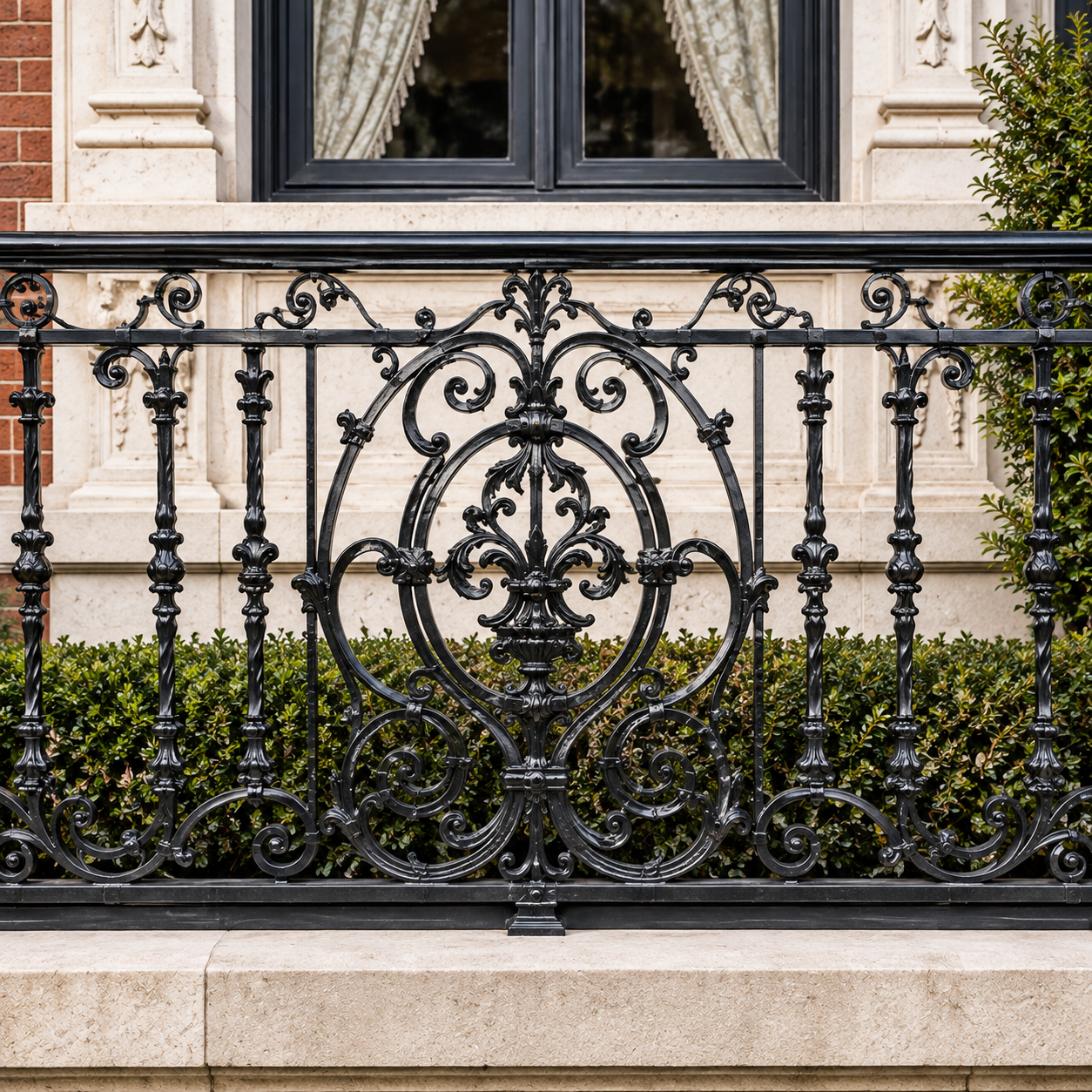
Custom Wrought Iron Railings Built to Your Specifications
Some homeowners come to us with a clear picture in mind. Others just know their current railing doesn’t work anymore and they want something better. Either way, custom wrought iron railings start with a design conversation, not a catalog page.
Here’s the thing about NYC’s attached brick and frame rowhouse stock: it was never built to a single standard. Stoop widths shift from block to block, stair angles vary, and older homes settle in ways that throw off measurements. An off-the-shelf railing rarely fits right because of this. So we measure and forge each railing to the actual dimensions of your property, not a generic size.
Wrought iron holds fine detail — scrollwork, twisted balusters, forged collars, hand-formed scrolls — in a way that extruded or welded stock simply can’t. It’s also strong enough to carry a stoop rail through decades of New York winters when it’s finished and maintained properly. That combination of detail and durability is why it remains the material most of our residential work is built in. This is different from repair work. Custom wrought iron railings cover new fabrication and design, built from scratch to match your style and your space. If your existing railing just needs fixing instead of replacing, that’s a separate conversation, one we cover under railing repair below. Getting the measurements right up front is the step people most often underestimate. It saves a great deal of trouble later.
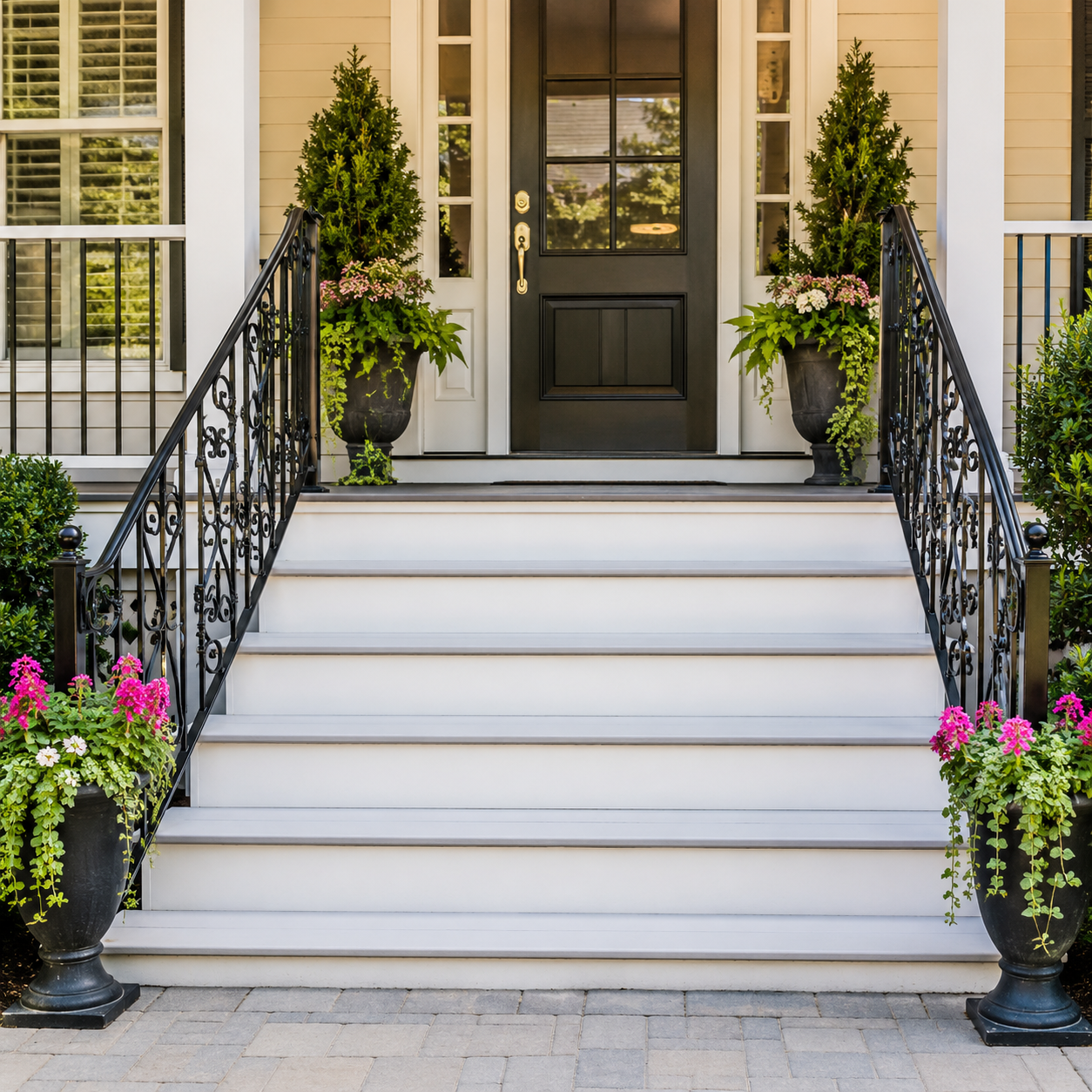
Your front stoop is the first thing people see when they walk up to your house. Across NYC’s attached rowhouse blocks, where street-facing stoops are the norm, that railing has to do double duty: look good and hold up to daily use on entry stairs.
Stoop and porch railings cover entryway stairs specifically. That’s different from custom wrought iron railings, which cover any other spot or design request on your property. If it’s the front entry, this is the service you want.
This is a summary. Full details on height rules, baluster spacing, and masonry anchoring live on the dedicated page.
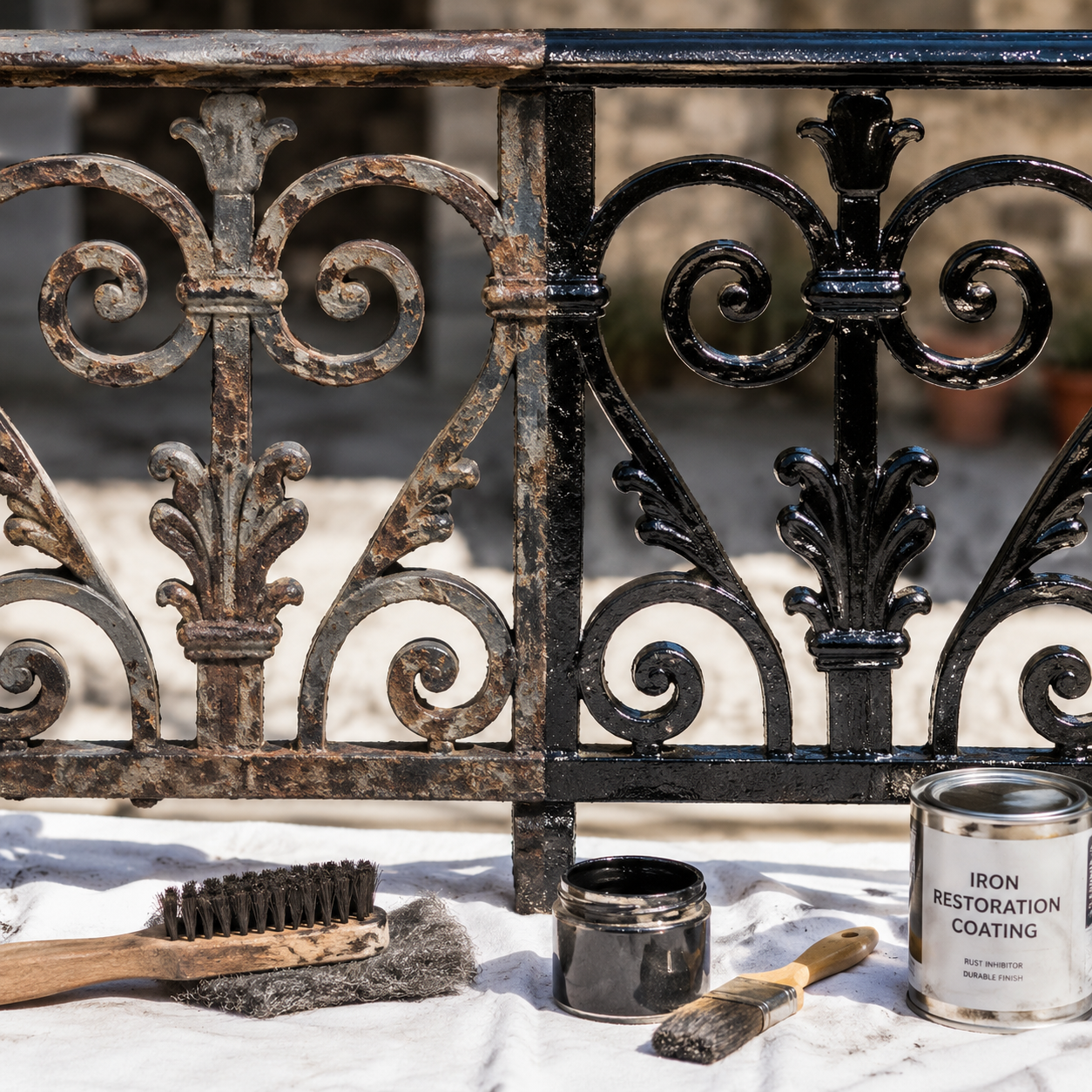
Got a railing that’s rusted through, wobbly, or missing a baluster after a storm? That’s a repair question, not a replacement one, at least not automatically. We inspect the railing first, then repair, re-weld, or restore it to match the original look wherever we can. A lot of people assume any rust means the whole thing has to go, but that’s not always true. Sometimes a section can be cut out and replaced while the rest of the railing stays put.
Winter salt and ice exposure speeds up rust on exterior stoop and balcony railings, so repair work tends to cluster in early spring. If your railing has been through a few New York winters, that’s usually when the damage starts showing along the base and the joints.
The key distinction: this service fixes or saves what you already have. New fabrication replaces it outright when repair isn’t realistic anymore — when the structure is too far gone, or the original design no longer works for how the property is used. We’ll tell you straight which situation you’re in after a look.
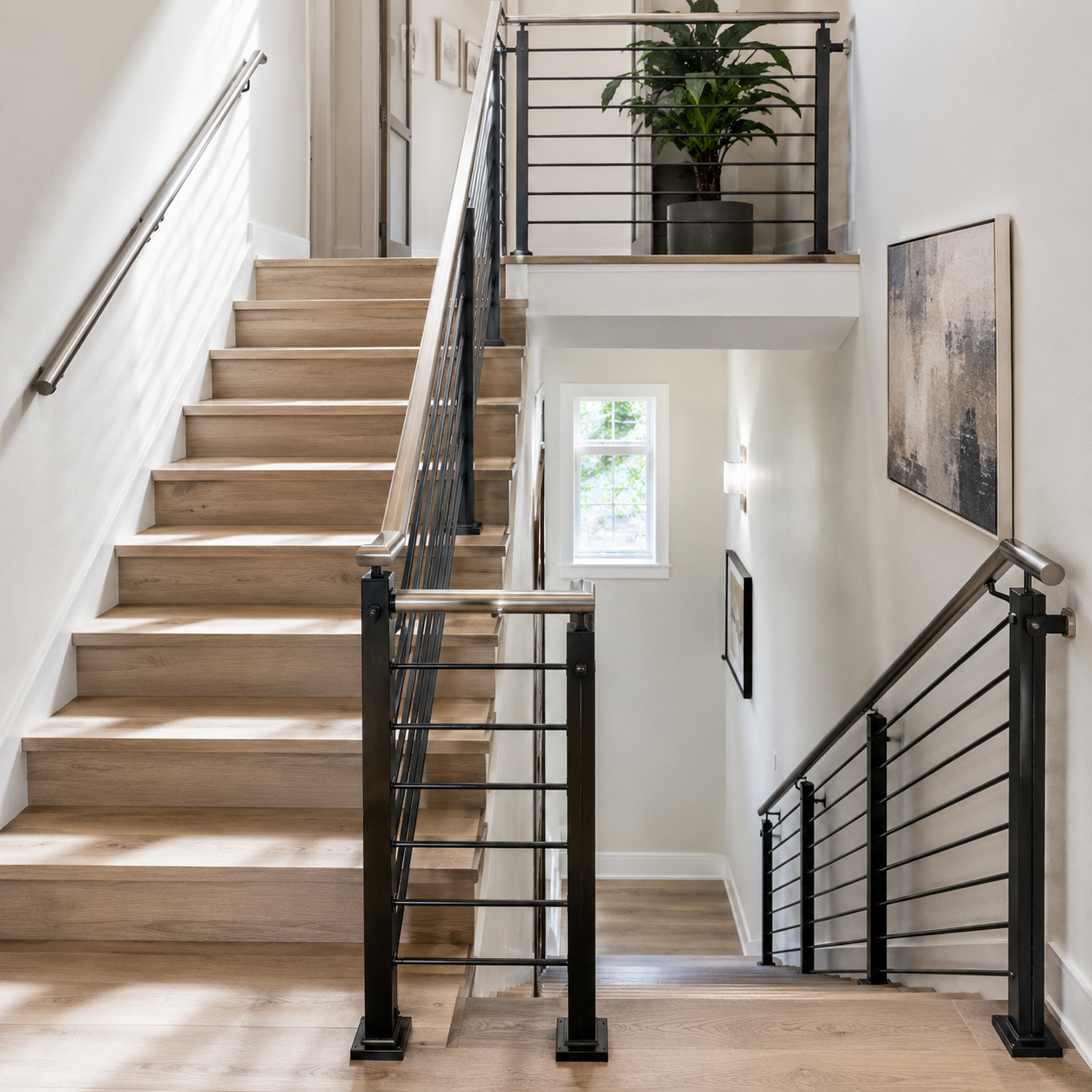
Renovating an interior staircase? The railing needs to match the rest of your home — the trim, the woodwork, the overall feel of the space.
We build interior stair railings to fit your stair dimensions, with finish options that work alongside existing wood or paint. We template on site, so every curve, landing, and newel fits exactly.
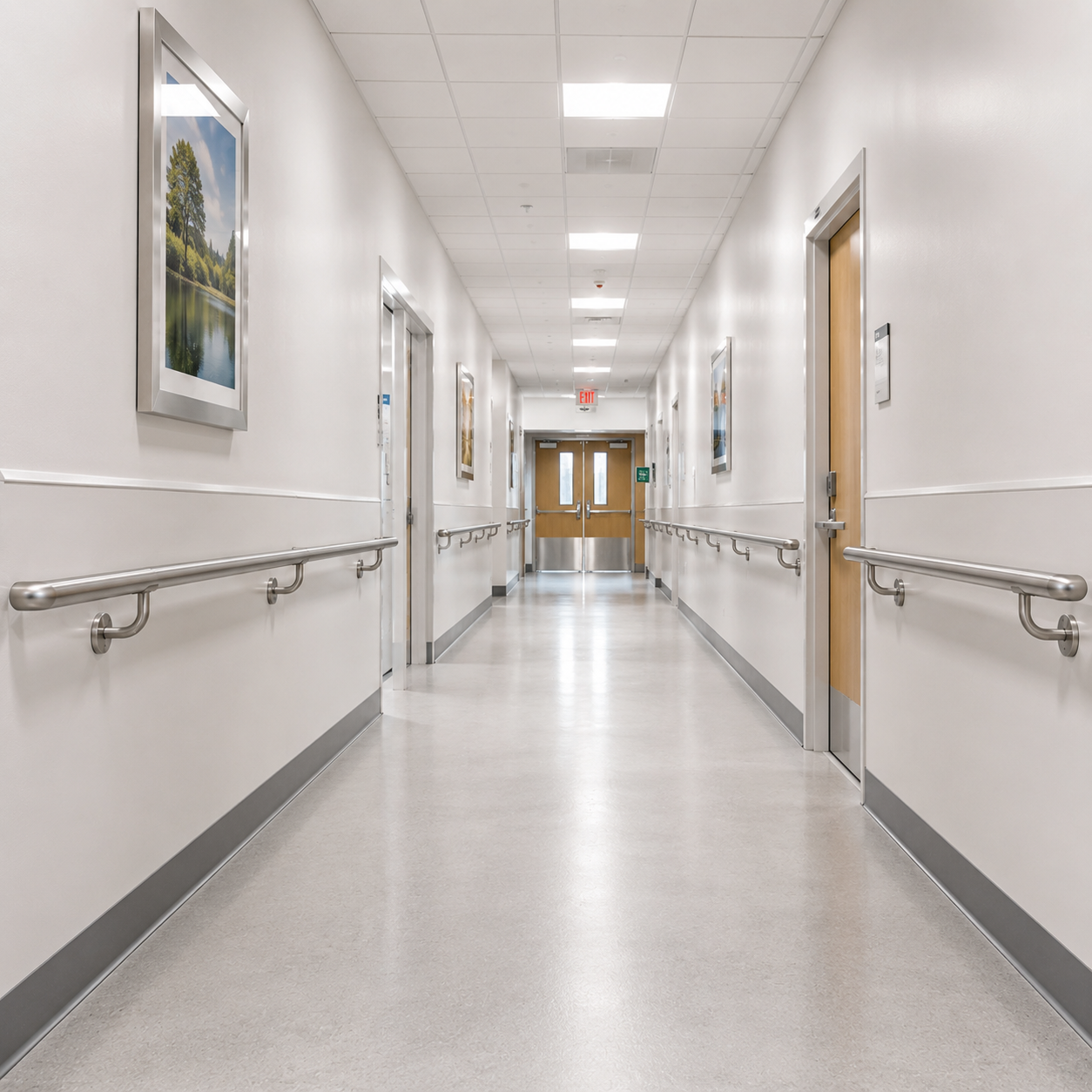
This is decorative, residential work — a different job from ADA and commercial handrails, which are built to meet accessibility code in commercial or public buildings rather than to match a homeowner’s taste. If you’re updating a staircase inside your home, this is your service.
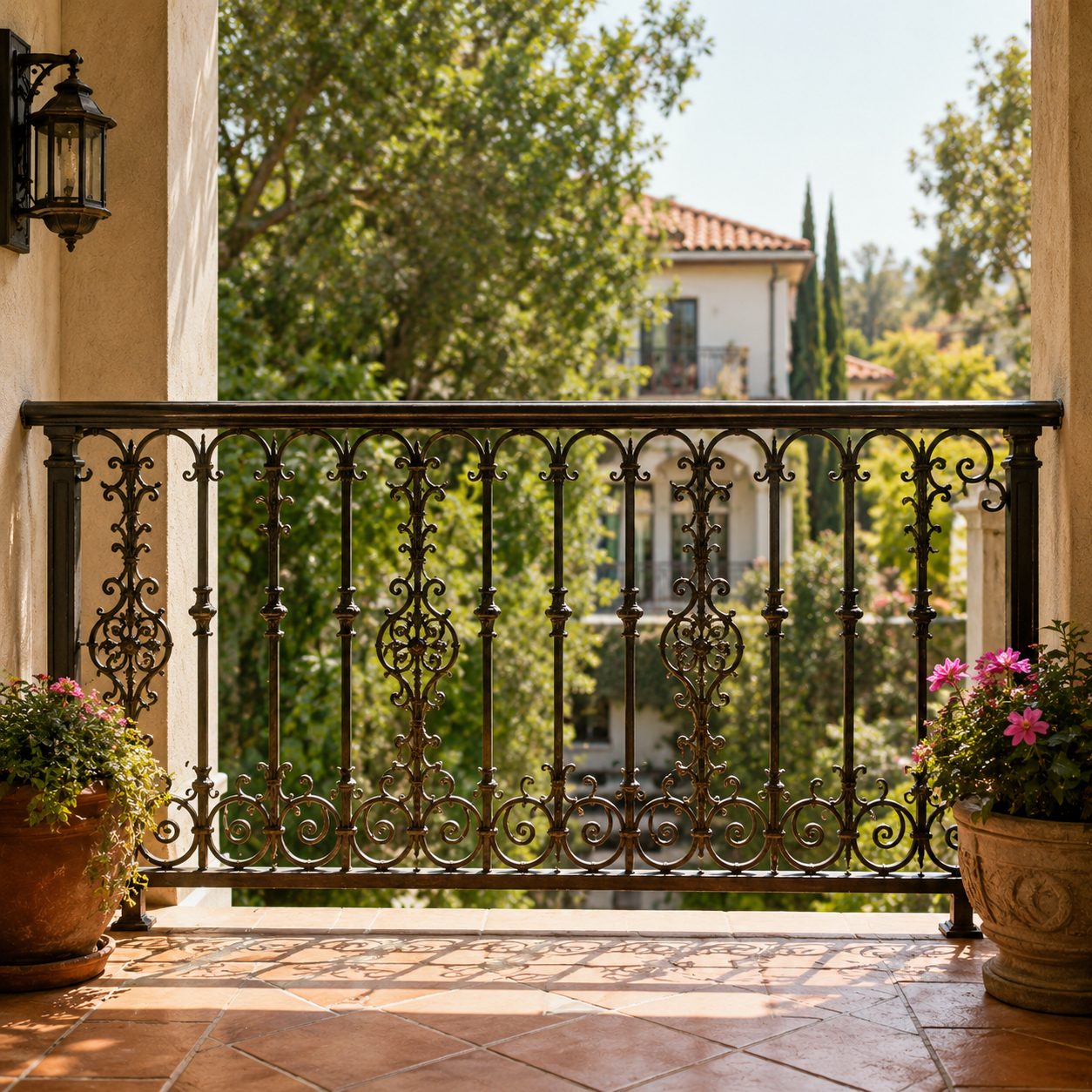
Got a balcony that needs a new railing? This one’s specific to smaller attached platforms and Juliet balconies, not full rooftop or terrace spaces, which fall under different rules entirely.
We build balcony railings to the height and load requirements that apply to that kind of platform, and design them to match the rest of your building’s look. A few things worth thinking about before you reach out:
- How old the current railing is, and whether it’s original to the building
- What the balcony is used for day to day
- Whether the building has other iron detailing we should match
Balcony railings cover smaller attached platforms. Roof and terrace guardrails apply to larger rooftop or terrace areas with different height and load rules. If you’re dealing with a full roof deck instead of a small balcony, that’s the section below. We can walk you through which category your space falls into if you’re not sure.
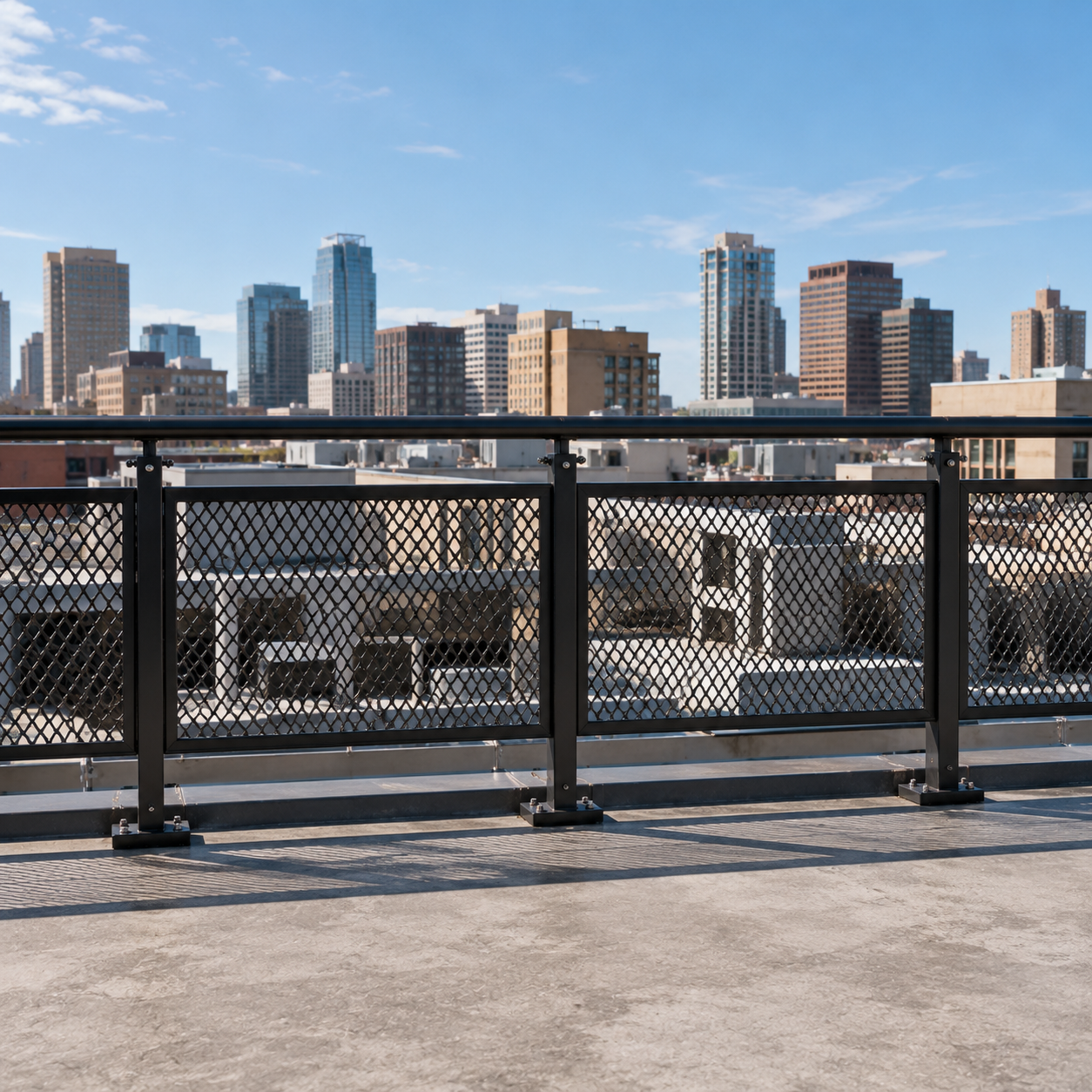
Using your roof or terrace for anything — storage, seating, a garden — means that space needs a guardrail that meets code for larger open areas. That’s a different set of height and load rules than what applies to a small balcony.
Plenty of NYC buildings use rooftop space for storage or seasonal use, which brings those areas under the same guardrail rules as any occupied roof. It doesn’t matter that the space started out as just storage. Once people are up there regularly, code treats it as occupied.
We design and install guardrails built for that larger footprint, sized correctly for the area and load involved. This is where roof and terrace guardrails and balcony railings split apart: one serves a small attached platform, the other covers a bigger open space with its own rules. If you’re not sure which category your rooftop falls into, that’s a fair question to bring to us before planning anything else for the space.
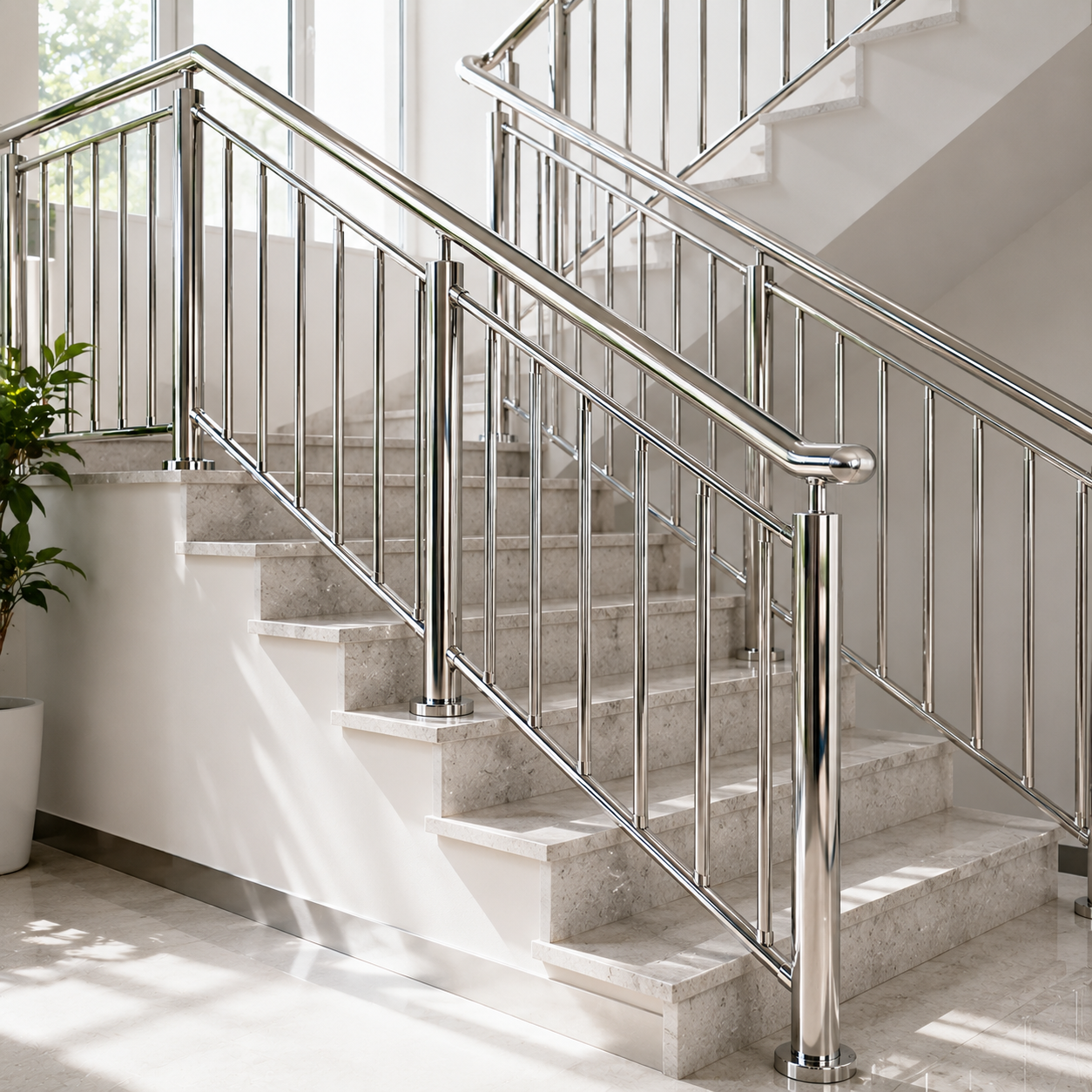
Want a railing material that shrugs off rust with less upkeep? Stainless steel holds its finish against weather exposure better than painted iron does over time, which makes it a common choice for lofts, modern renovations, and commercial interiors.
We fabricate stainless railings in brushed or polished finishes, with cable and glass infill options where the design calls for a more open look. Exterior-grade stainless holds up well in high-exposure and waterfront locations across the boroughs.
This is a material choice, not a quality comparison. Stainless offers corrosion resistance and a heavier finish, while aluminum, covered next, offers a lighter option with a different maintenance profile. Neither one is better across the board. It depends on what you need from the railing and where it’s going.
Aluminum Railings
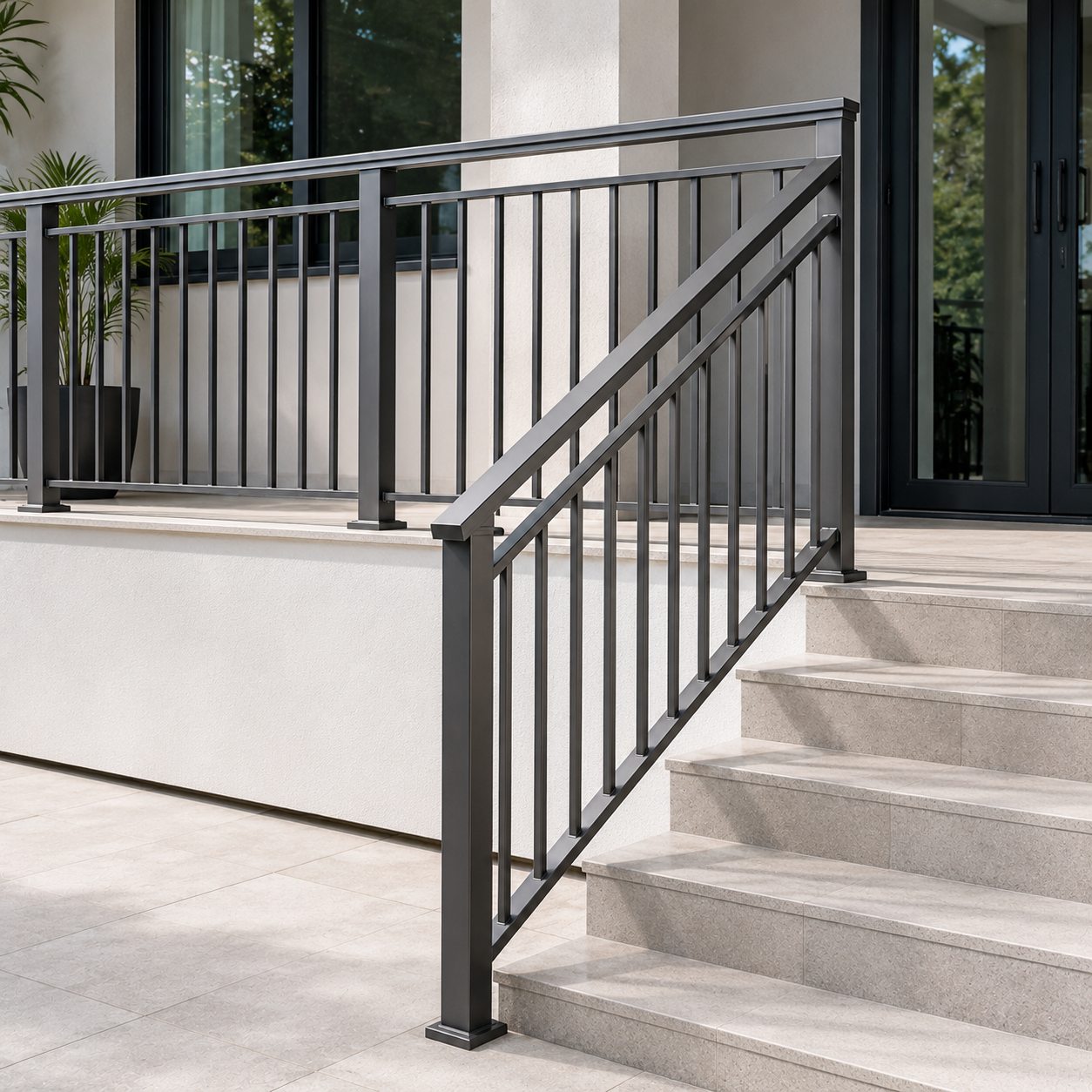
Looking for something lighter than iron or steel that still holds up well outdoors? Aluminum resists rust naturally and needs very little upkeep, which makes it a solid fit for decks, balconies, stairs, porches, and walkways.
We powder-coat aluminum railings in any color and fabricate them to your measurements rather than assembling from stock panels. The low weight also makes aluminum practical on structures where added load is a concern.
Aluminum is lighter and lower-maintenance. Stainless steel offers a heavier, more corrosion-resistant option built for different applications. This isn’t about one being a cheaper stand-in for the other — they’re built for different situations, and we can help you work out which one fits your project.
Landmark & LPC-Compliant Railings
Landmarks Preservation Commission review applies to properties that are individually designated, or that sit inside the boundaries of a designated historic district. Designation is the only trigger. Being near a historic district, or next door to a landmarked building, does not put your address under LPC jurisdiction. If you’re unsure, confirm your specific address’s designation status before assuming either way.
If your property is designated, exterior railings visible from the street generally need to pass LPC review before work starts. That review looks at material, profile, and how closely new work matches existing detail. We prepare submission drawings and replicate original profiles for railings on designated properties.
Landmark and LPC work runs well beyond railings — gates, fences, doors, and full historic ironwork replication. All of it is covered on our Custom Ornamental Ironwork page.
Frequently Asked Questions
Do you install and repair railings throughout NYC?
Yes. European Custom Iron works on stoop, balcony, interior, and commercial railings for homeowners and building owners across all five boroughs. Our workshop is on Myrtle Avenue in Glendale, Queens, but most of the work happens at your property. We measure on site, since attached and semi-attached homes rarely share the same stoop width or stair angle.
How do I know if my railing needs repair or a full replacement?
It depends on how far the damage has gone, not just how rusty the railing looks. A lot of people assume any rust means the whole railing has to go, but sections can often be cut out and replaced while the rest stays put. We inspect it first, then tell you straight whether repair makes sense or whether the structure is too far gone to save.
Does my railing need Landmarks Preservation Commission approval?
Only if your specific address is individually designated or sits inside a designated historic district’s boundaries. Proximity doesn’t trigger review — being near or next door to a designated property makes no difference on its own. Check your address’s status first. If it is designated, exterior railings visible from the street generally need LPC review before work starts, and that review looks at matching material and profile rather than blocking changes outright.
Why do so many NYC stoop railings rust out around the same time?
Winter salt and ice exposure speeds up rust on exterior stoop and balcony railings, so repair work tends to cluster in early spring. Attached and semi-attached brick homes across the boroughs often have railings that are decades old and original to the house. If yours has been through a few New York winters, that’s usually when the rust starts showing up along the base and joints.
What’s the difference between stoop railings and balcony railings?
Stoop and porch railings cover your front entry stairs, while balcony railings are built for smaller attached platforms with their own height and load requirements. If people walk up it to reach your door, it’s a stoop railing job. If it’s a small platform off an upper floor, that’s balcony work, and the two get built to different standards.
Should I get an interior stair railing or a code-compliant handrail?
It comes down to whether the space is a private home or a commercial or public building. Interior stair railings are decorative work built to match your home’s trim and finish. ADA and commercial handrails are built to meet accessibility code for public or commercial buildings, not to match personal style. Tell us which one applies and we’ll point you to the right fit.
Ready to Get Started?
Call European Custom Iron to get started on your railing project. Ask about a free estimate, and we’ll help you work out exactly which service fits what you need.