
Roof & Terrace Guardrails in Glendale: Custom Ironwork Built to Code
- 5.0 rating on Google reviews
- Licensed and insured
- Custom fabrication in steel, wrought iron, stainless, and aluminum
When a Roof or Terrace Legally Needs a Guardrail
NYC Building Code §1015.2 requires a guardrail on any occupied open-sided walking surface more than 30 inches above grade or the floor below. In Glendale, this rule is triggered constantly by rooftop and rear-yard deck additions on one- and two-family rowhouses. A code-accurate site assessment, not a visual estimate, determines the exact height, spacing, and load requirements before any design work begins.
The 30-inch threshold is measured vertically from the walking surface to whatever is directly below, whether that’s a backyard, an adjacent roof, or a lower terrace. Once that measurement exceeds 30 inches, a compliant guardrail becomes mandatory, regardless of how the space is used or how infrequently someone visits it.
Glendale’s housing stock makes this trigger common — one- and two-family brick and frame rowhouses, many dating to the early-to-mid 20th century, with flat or low-slope roofs and modest rear yards. Homeowners routinely convert these roofs into usable terraces or add raised rear decks, and because these structures are almost always elevated past the 30-inch mark, they fall under §1015.2 regardless of whether the homeowner planned for a guardrail.
Thirty inches sounds simple until applied to a real, sloped, or irregular roof. Parapet height, bulkhead placement, adjacent rooflines, and rear-yard grade changes all affect where the code line falls.
Maintenance-Only Roofs That Don't Require a Full Guardrail
Not every rooftop in Glendale needs a permanent guardrail system. NYC Building Code, following IBC Section 1015.2, carves out an exception for roofs used exclusively for maintenance — HVAC condenser access or a technician checking a rooftop unit a few times a year. If the roof isn’t used as an occupied walkway, patio, or gathering space, and access is limited to trained personnel, a full 42-inch guardrail assembly may not be legally mandated.
- Roof is accessed only by maintenance or service personnel, never occupants or tenants
- No scheduled or incidental use as a rooftop deck, patio, or gathering space
- Alternative fall protection, like warning lines or anchor points, is feasible for occasional service visits
We walk every Glendale property in person before quoting anything. We’ve turned away jobs where a building owner assumed a full guardrail was required, when a proper code reading showed the roof qualified for the maintenance-only exception. Call for a Free Roof Assessment
Choosing Wrought Iron, Aluminum, or Stainless for Your Guardrail
Selecting the right material shapes installation timeline and long-term upkeep. Wind, moisture, and seasonal temperature swings put real stress on both the metal and its fasteners.
- Wrought iron: the most traditional, ornamental look with strong rigidity. Needs periodic repainting or powder-coat touch-ups once the finish is compromised.
- Aluminum: naturally corrosion-resistant, weighs less for easier rooftop handling. Can dent more easily than iron.
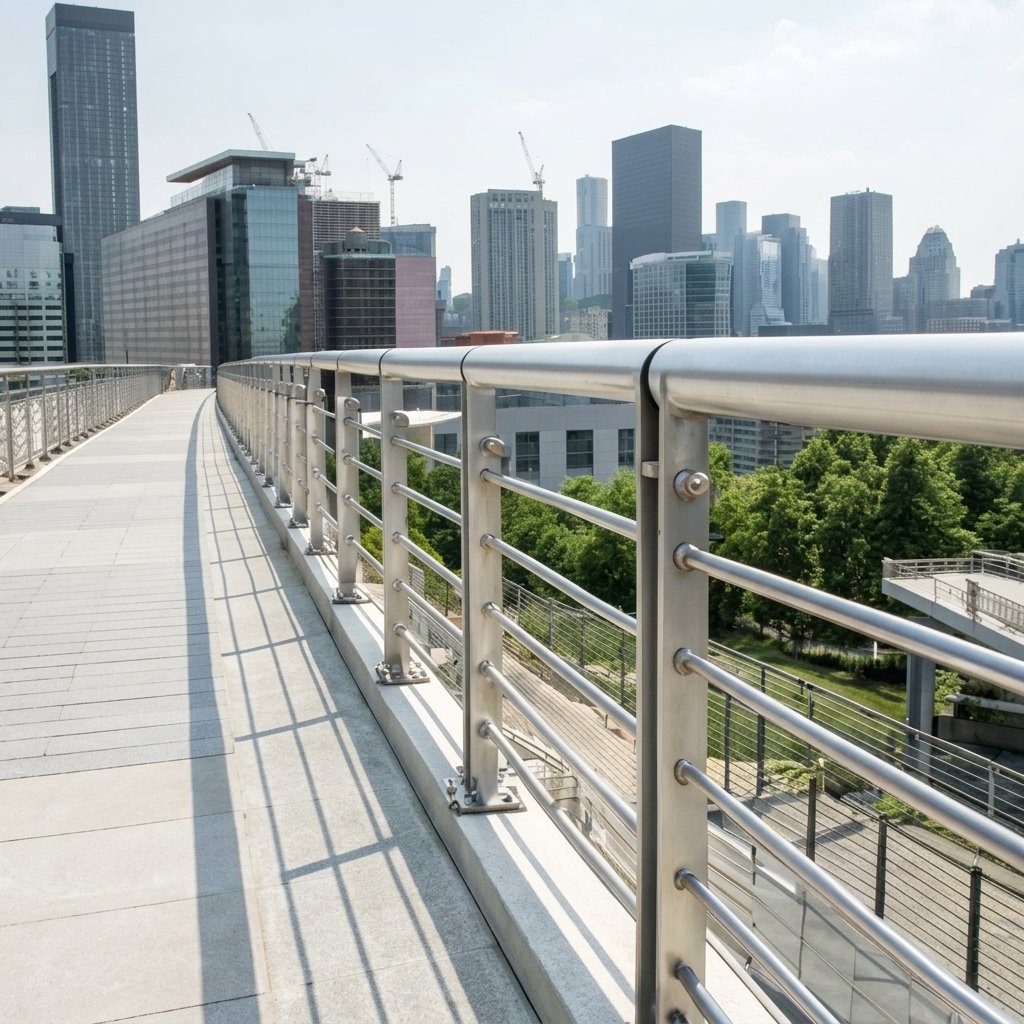
- Stainless steel: the highest corrosion resistance and most contemporary look, strong for exposed high-rise terraces. Costs more than the other two.
New York’s freeze-thaw winters are a real factor here — repeated cycles of ice expansion and thaw can accelerate corrosion at weld points and anchor bases if the finish isn’t suited to the exposure. We generally steer clients toward hot-dip galvanized coatings, powder-coated finishes, or stainless hardware for any guardrail with direct wind and precipitation exposure. Pricing is estimate-based — the material chosen, the difficulty of anchoring into the existing parapet, and the scope of permit filing required all drive the final number.
How Custom Guardrails Are Measured, Fabricated, and Installed in Glendale
A guardrail is only as good as the measurements behind it. We’ve walked plenty of roof decks in Glendale where the old railing was installed crooked because someone eyeballed it instead of checking the slope first.
- We measure the exact perimeter, checking slope, drainage angles, and uneven parapet walls common on older Glendale roofs
- We talk through height and style — rooftop terraces often need taller rails than a front stoop
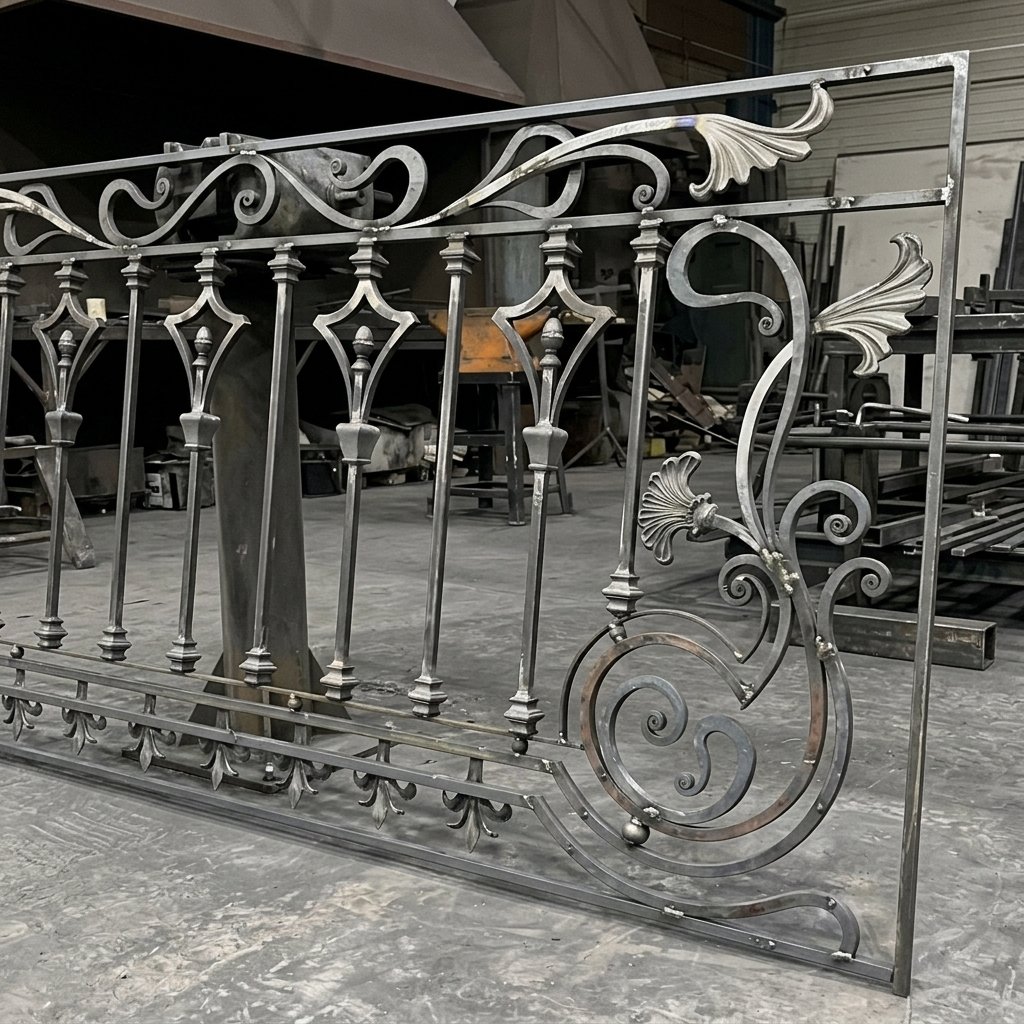
- Our team fabricates the ironwork by hand to match the measurements taken on site
- We prep the mounting surface, since concrete, brick, and old built-up roofing all take anchoring differently
- We install the guardrail and check it for wobble before we call the job done
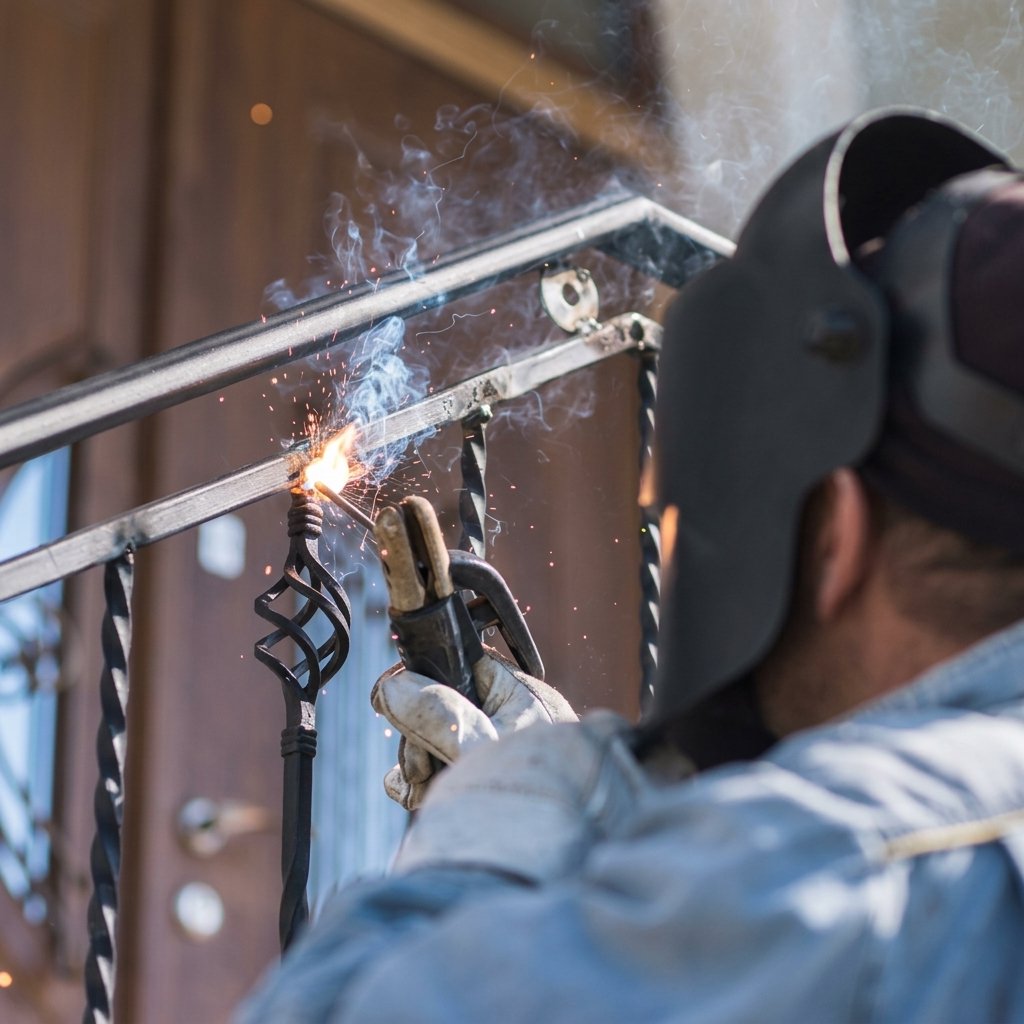
Fabrication happens off site in a shop, not rushed on a rooftop with wind kicking up. Glendale has many flat-roof apartment buildings from the mid-century era that get used as terraces more than people realize, and old parapet walls weren’t built with guardrail anchoring in mind — we adjust our mounting approach case by case.
Code Checks and Long-Term Care After Installation
Once a guardrail goes up, our job isn’t done. We check spacing between pickets, the height off the deck surface, and how solid the base connection is — codes set these minimums for a real reason, since a gap too wide or a rail too short can turn a fall into something serious.
- Check welds and joints yearly for surface rust or hairline cracks
- Keep drainage paths near the base clear so water doesn’t pool against iron
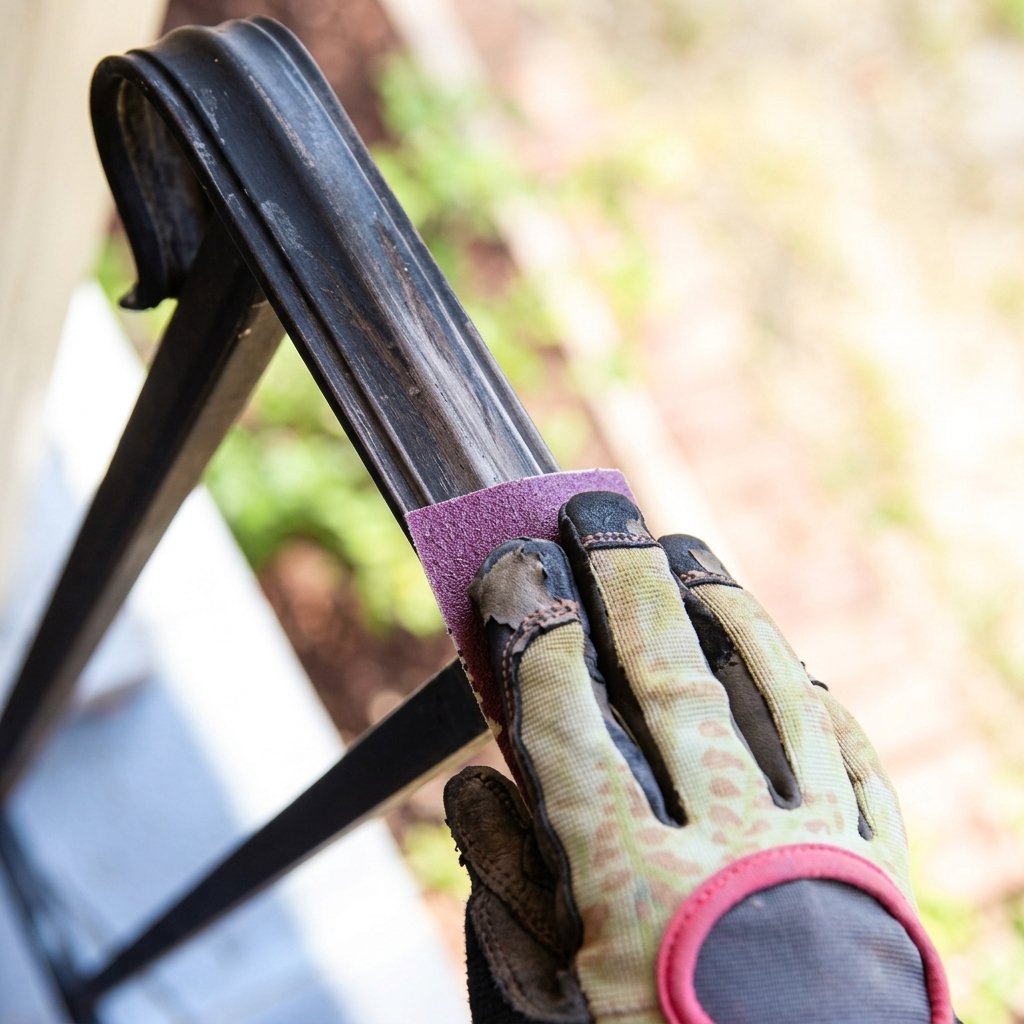
- Touch up scratched paint or coating before bare metal shows, and have loose bolts checked right away
Wipe down winter road-salt residue where it collects near the base. The calls we get about older guardrails are usually about the same thing: a loose post base nobody caught early.
Frequently Asked Questions
How fast can you come out to look at my roof or terrace in Glendale?
We typically schedule a free on-site assessment within a few days of your call. During the visit, we measure your walking surface against the 30-inch code threshold and check parapet height, roofline, and grade changes, so you know right away whether a guardrail is legally required.
Do all rooftop decks on Glendale rowhouses need a guardrail?
Most do, because Glendale’s one- and two-family brick and frame rowhouses almost always put a roof deck or raised rear deck more than 30 inches above grade. NYC Building Code §1015.2 makes a guardrail mandatory once that height is exceeded, no matter how often the space gets used. Flat or sloped older roofs can look borderline from the ground but clearly cross the threshold once measured properly.
Does every flat roof with equipment on it need a full guardrail?
No, not if the roof is used only for maintenance access, like servicing an HVAC condenser a few times a year. Code allows an exception for roofs that aren’t occupied as a deck, patio, or gathering space. Warning lines or fall arrest systems for service technicians can replace a permanent guardrail in those cases. We walk every property first to confirm which rule applies.