Custom Ornamental Ironwork in New York City
Licensed and Insured Custom Metal Fabrication in New York City
- 30+ years of iron works experience
- 5.0 rating Over 92 Google reviews
- Licensed and insured
- Custom fabrication in steel, wrought iron, stainless, and aluminum
Ornamental Ironwork Is a Craft, Not a Catalog
Across New York City, rows of attached brick homes and older multi-family buildings still carry original stoop rails, entry doors, and fire escapes — plenty of them worn thin from decades of weather.
Ornamental ironwork isn’t the same as structural steel. Structural steel holds a building up; ornamental ironwork is what you actually see and touch every day — railings, doors, gates, restoration pieces, and the egress ironwork required on older multi-family buildings. It’s as much craft as construction.
We work as ornamental ironworkers, not a production shop shipping out stock parts. Every piece gets designed for the specific building it’s going on. We field-measure the actual opening or run, fabricate it in our workshop on Myrtle Avenue in Glendale, Queens, and install it with the same crew that built it. That’s the part people underestimate: having one team handle everything from design through installation avoids a lot of the mismatches that come from buying imported stock ironwork and hiring someone else to hang it.
Material choice matters more in New York than most people expect. Salt air, coastal humidity, and freeze-thaw cycles wear on metal differently depending on what it’s made of. Wrought iron holds detail and strength well but needs upkeep. Stainless resists corrosion. Aluminum is lighter and needs less maintenance. Across the five boroughs, most of the ornamental ironwork calls we get involve either replacing failed original ironwork or building new work to match a building’s existing period style.
European Custom Iron has spent over 30 years in iron works and metal fabrication, bringing old-world European quality to properties across Manhattan, Brooklyn, Queens, the Bronx, and Staten Island. We’re licensed and insured, and we’ve built a 5.0 rating across 92 Google reviews doing this work.
Contact European Custom Iron today to talk through your ironwork project.
Landmark & LPC-Compliant Ironwork
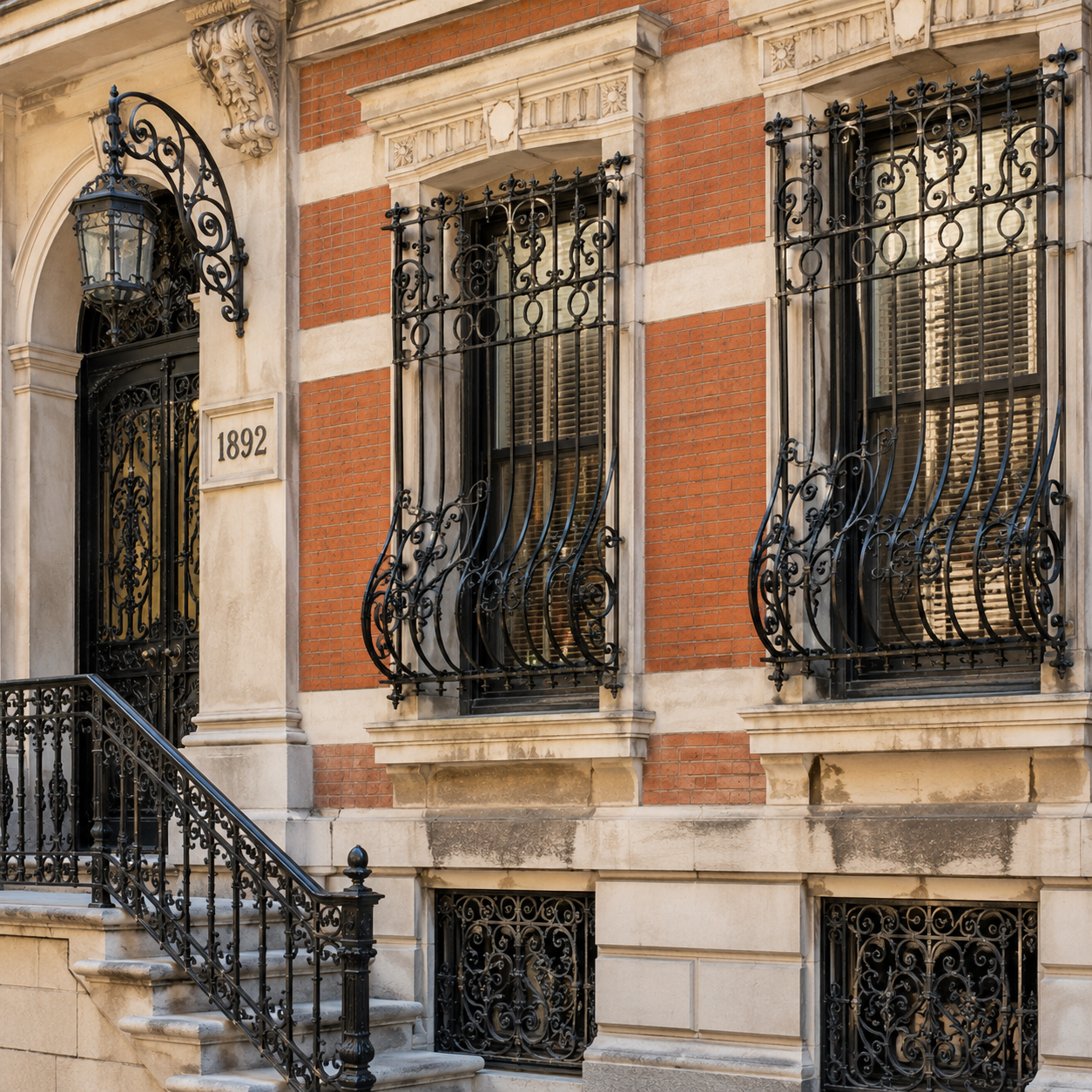
Here’s a question we get a lot: does living near a historic district mean you need Landmarks Preservation Commission approval for ironwork? No. LPC jurisdiction comes down to whether your specific address is individually designated, or falls inside the boundaries of a designated historic district. Being nearby, or even next door, doesn’t trigger review on its own.
The first step for any owner is simple: check whether your address is actually designated. If it is, exterior ironwork visible from the street generally needs review before work starts. That review looks at material, profile, and how closely new work matches existing detail — it isn’t a blanket no on changes.
We prepare LPC submission drawings, replicate original profiles, and fabricate railings, gates, fences, and doors for designated properties. Replacing missing or failed historic ironwork tends to go more smoothly when the replacement matches documented original detail rather than a generic substitute, and we know what that review process is looking for.
This service covers the approval process and the period-accurate fabrication that goes with it, on properties that are actually designated. For railings on non-designated buildings — which is most of what we build day to day — see our Custom Railings page.
Have questions? We’re happy to help. (347) 554-1141 · Request Your Free Estimate
Historic Ironwork Restoration & Replication
Older buildings don’t always keep their original ironwork intact. Sections go missing, corrode past saving, or get replaced badly at some point over the decades. Historic ironwork restoration starts with assessing what original detail actually survives on the building.
From there, we take patterns from the surviving sections and forge replacement components to match the period profile — not swap in stock parts that look close enough. New work gets blended into the existing run so it reads as one piece, rather than a patch job.
This applies broadly across pre-war and turn-of-the-century NYC building stock — brownstones, rowhouses, landmarks, and pre-war apartment buildings — not just one style or one block. Where a property is designated, historic ironwork restoration and LPC review usually run together, and we handle both sides of that.
Handcrafted Iron Doors
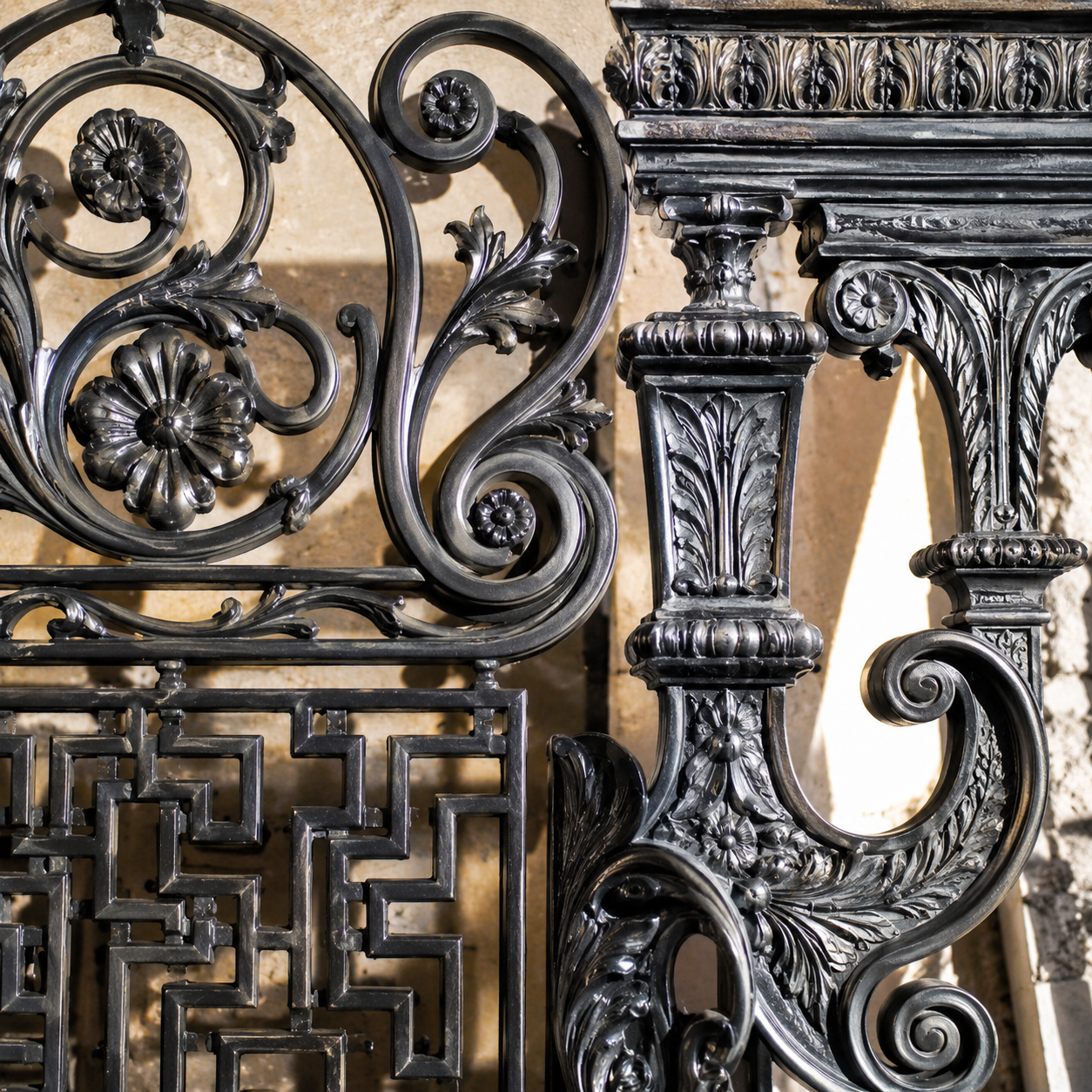
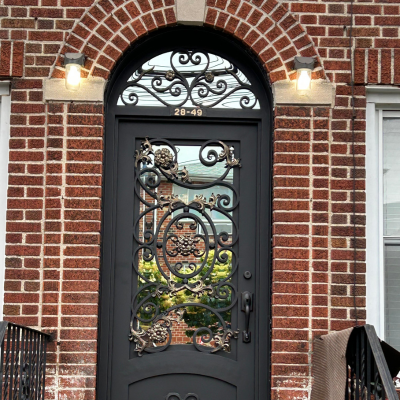
A handcrafted iron door is a solid forged entry piece, built with custom panel and scrollwork designs and, where wanted, glass inserts, operable panels, and thermal breaks. We build these to the actual opening in your building rather than fitting a stock size and hoping it works.
Old-world European forging techniques and hardware are the point here — the door is made, hung, and finished by our own craftsmen.
This differs from repair work: railing repair handles fixes on functional railings already in place, while historic ironwork restoration focuses on period-accurate replication for older or landmarked ironwork.
Fire Escape Repair & Egress Stairs
Fire escape work is compliance work, not decoration. NYC multi-family buildings depend on exterior fire escapes for required egress, and most owners who call us are responding to an inspection finding, visible corrosion, or a violation notice — not a design preference. Fire escapes fall under periodic inspection requirements, and a failed inspection or an open violation puts an owner on a clock. The repairs themselves are welding and fabrication work: replacing corroded treads, ladders, stringers, and landings, re-securing anchors into masonry, remediating rust, and repainting so the assembly meets DOB and FDNY inspection requirements.
What we handle:
- Structural repair and replacement of treads, ladders, and landings
- Rust remediation and repainting to inspection standard
- Anchor and connection repair into brick and masonry
- Egress stair fabrication and replacement
- Work driven by inspection findings and violation removal
If you’ve had an inspection finding or a violation notice, that’s the point to call. Waiting past one usually turns a smaller repair into a larger one. Full details on our fire escape repair and egress stairs page. Thinking about custom ornamental ironwork? Let’s talk. (347) 554-1141 · Request Your Free Estimate
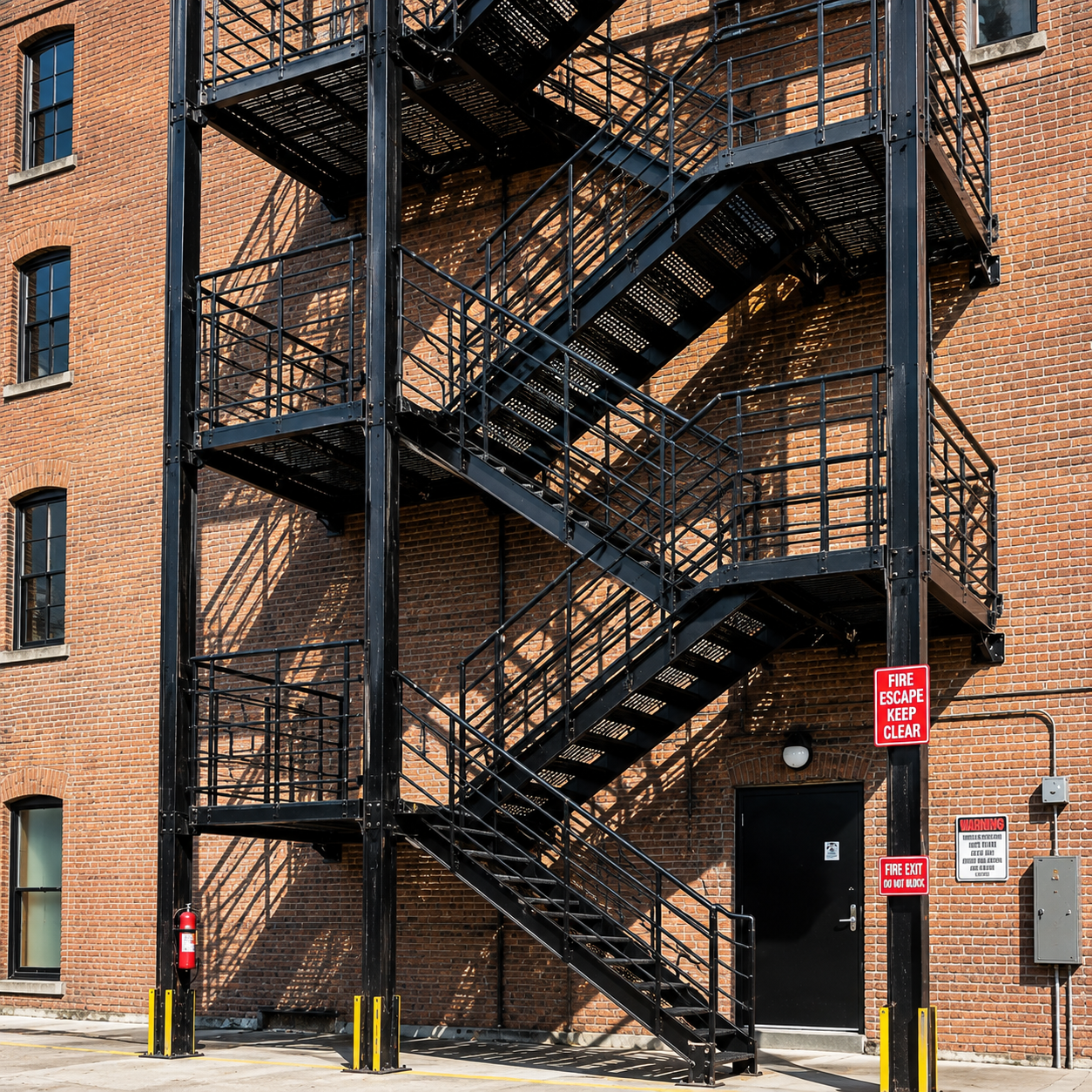
How Custom Ironwork Gets Made
People sometimes assume custom ironwork means picking a design from a catalog. It doesn’t work that way here. Every job starts with a site visit and field measurement of the actual run or opening, because existing NYC buildings are rarely square or standard — old brick settles, openings shift, and stairs aren’t always the same width top to bottom.
After measuring, we put together shop drawings for approval before any steel gets cut. Once approved, fabrication and forging happen at our Glendale workshop. Finishing comes next: grinding, priming, and a paint or powder coat chosen for exterior exposure, since what holds up on a coastal building differs from an interior stair. Then comes installation and anchoring into brick, brownstone, concrete, or steel — done by the same crew that built the piece.
Field measurement matters more than catalog sizing on older buildings. And having one shop handle design, fabrication, and installation avoids the handoff problems that come from buying imported stock ironwork and hiring a separate crew to install it. We’ve refined this process over 30+ years in iron works and metal fabrication.
Our Other Category Pages
Several of our services live on their own category pages, since each covers a lot of ground on its own.
Custom Railings
Wrought iron, stoop and porch, interior stair, balcony, roof and terrace guardrails, stainless, aluminum, ADA and commercial handrails, and railing repair
Iron Gates & Fencing
Automated driveway gates, estate gates and perimeter fencing, iron fencing, and security gates and window guards
Commercial Ironwork & Metal Fabrication
Metal and steel staircases, spiral staircases, cellar and sidewalk doors, and tree guards
Frequently Asked Questions
Does living near a historic district mean I need LPC approval for ironwork?
No, not just because you’re nearby. Landmarks Preservation Commission review only applies if your specific address is individually designated or sits inside a designated historic district’s boundaries. Being next door doesn’t trigger it. Check your address first. If it is designated, exterior ironwork visible from the street usually needs review before work starts, but that review looks at matching detail, not blocking changes outright.
My stoop railing is worn thin. Does that need repair or full replacement?
It depends on how much original metal is left. Attached brick homes across the city often have stoop rails that have taken decades of weather, and if enough sound iron remains, repair can bring it back. If corrosion has eaten through structural sections, replacement matching the original profile is usually the safer call. We can tell you which one your railing needs during a free estimate.
What’s the difference between a handcrafted iron door and iron railing repair?
A handcrafted iron door is a new entry piece built to your building’s exact opening, with custom panel work and optional glass inserts. Iron railing repair fixes existing railings that are already installed and functional. One is a build from scratch for your entryway, the other keeps what you already have working.
How do I know if I need historic ironwork restoration or standard railing repair?
It comes down to your building’s age and detail. Historic ironwork restoration replicates period-specific patterns and profiles for older or landmarked ironwork, matching what originally existed. Standard railing repair fixes functional railings already in place without that period-matching step. If your building has original detailing worth preserving, restoration is the right path. If it’s a working railing that just needs fixing, repair covers it.
How do I know if my property needs estate gates instead of a standard fence?
Estate gates and perimeter fencing make sense when your lot is larger or has more than one entry point. A standard iron fence works fine for most front or side yards. Properties with a long frontage, parkland boundaries, or multiple access points often need the bigger system to cover the whole boundary correctly.
When should I call about a fire escape on my building?
Call as soon as you notice corrosion, a violation notice, or an inspection finding on your fire escape. This is required egress for NYC multi-family buildings, so it’s compliance work, not a design choice. Waiting past an inspection finding can turn a smaller repair into a bigger job. Older multi-family buildings across the boroughs especially need regular checks on treads, ladders, and landings.
Ready to Get Started?
Call European Custom Iron to start your gate or fence project. Ask about a free estimate and we’ll talk through what your property actually needs.
Custom Railings |Commercial Ironwork & Metal Fabrication |Custom Ornamental Ironwork