
Iron Railing Repair & Restoration in Glendale: Fix It Right, Not Just Fast
- 5.0 rating on Google reviews
- Licensed and insured
- Custom fabrication in steel, wrought iron, stainless, and aluminum
Signs Your Iron Railing Needs Repair
Rust that flakes instead of wipes, posts that wobble when you grab them, and welds with visible gaps are the clearest signs your iron railing needs repair, not just paint. Catching these early keeps a small fix small.
Surface rust wipes off with a rag and looks orange and dusty — that’s not the problem. The problem is rust that’s bubbled up under old paint or eaten a hole clean through the metal. Once it’s gone that far, patching won’t hold.
- Rust bubbling under paint or flaking off in chunks along the balusters
- Posts that shift or wobble when you grab and shake them
- Visible gaps or cracks where welded joints have pulled apart
- Bent, missing, or badly rusted balusters between the top and bottom rail
- The whole railing pulling away from the stoop, steps, or porch base
A wobble like that means the anchor points have rusted through below the surface.
Repair or Replacement for Glendale Stoop Railings
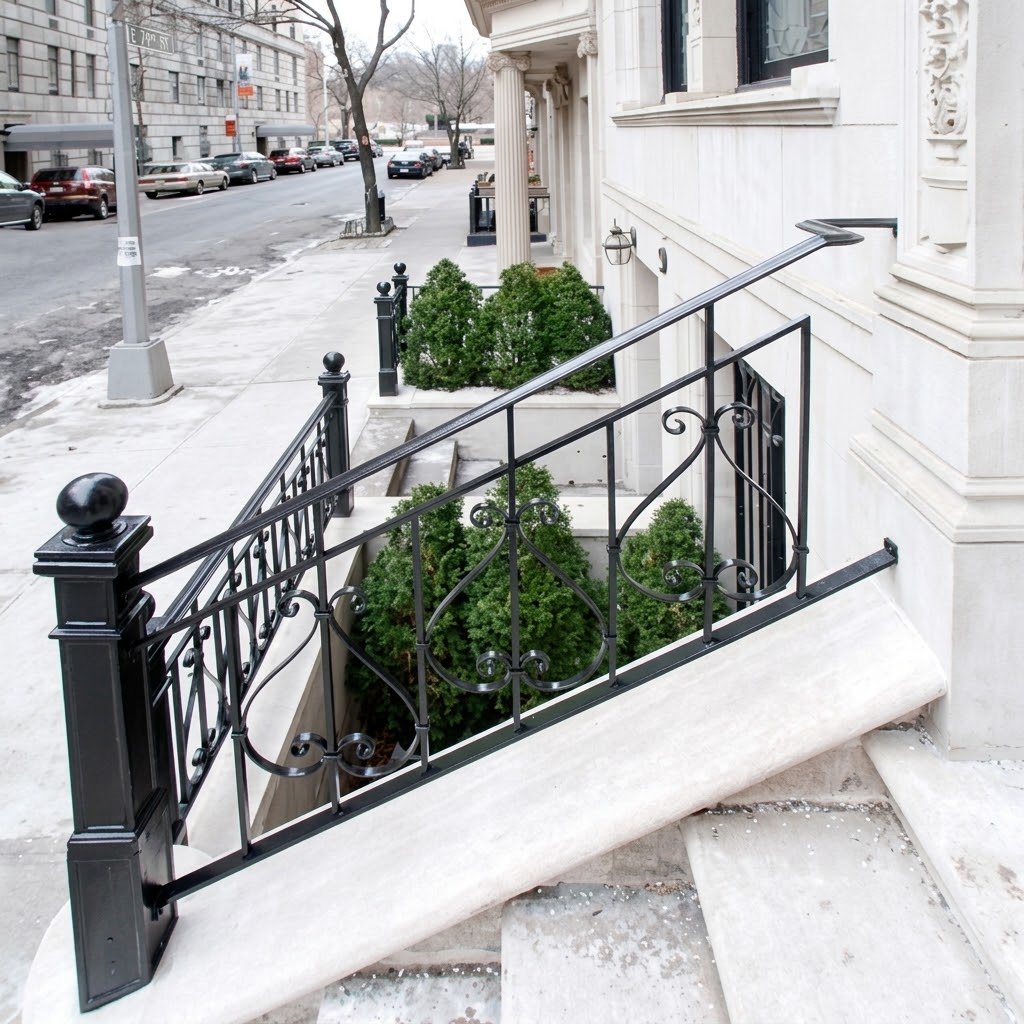
Stoop railings take the worst of it in Glendale. Rain runs down the steps, pools where the post meets the concrete, and that spot rusts from the inside out long before the paint shows a problem — common on older homes with steel posts set right into the stoop.
- Surface rust with solid metal underneath, usually repairable
- One post loose while the rest are firm, targeted repair
- Rust that’s eaten through the post at the base, needs replacement
- Multiple posts failing at once, replacement is the honest answer
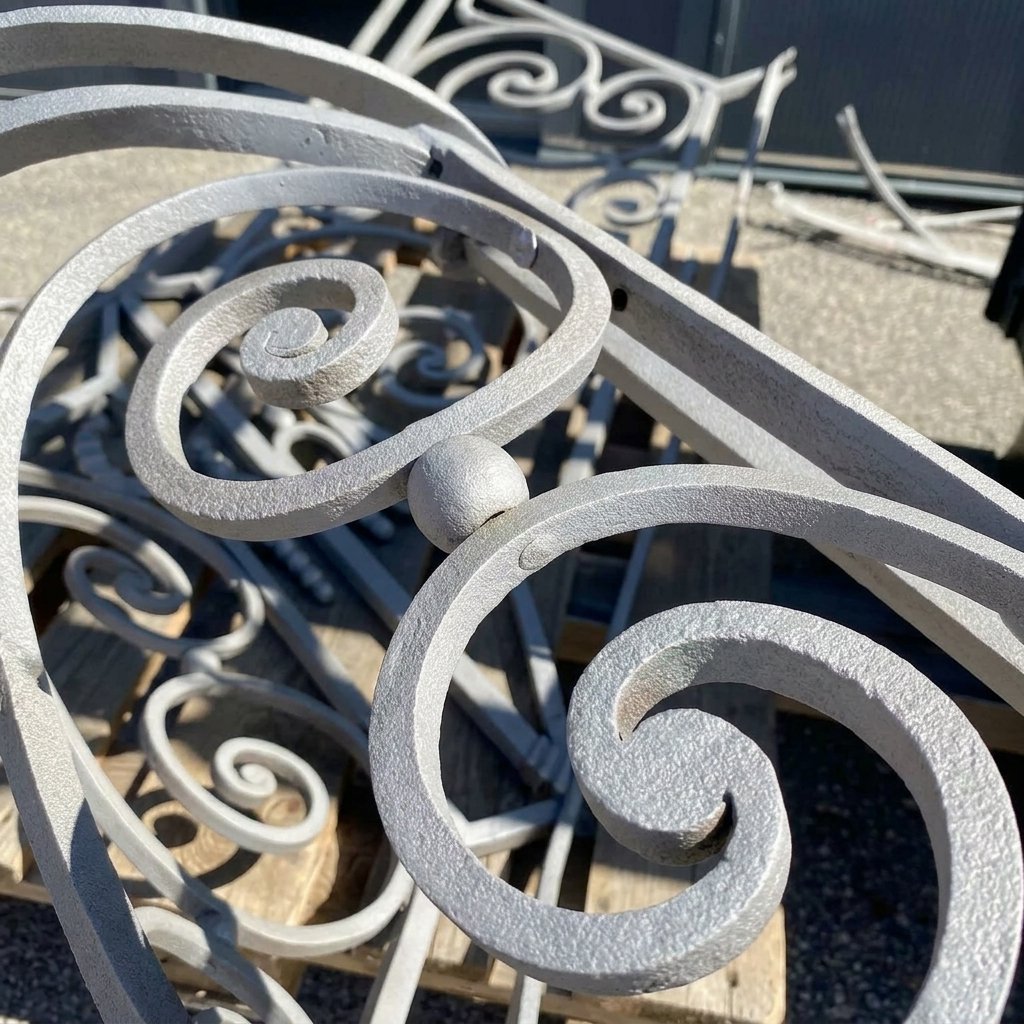
- Original ironwork with decorative detail worth saving, repair and restore instead of tossing it
If replacement ends up being the right move, our main service page for custom wrought iron railings shows the styles and options for a full stoop rebuild. Sometimes the repair estimate and the replacement estimate come back close enough that replacement just makes more sense long term.
When Your Railing Just Needs a Touch-Up, Not a Repair Crew
Not every wobble means trouble. A single loose baluster that rattles in the wind, a screw backed halfway out, or a thin scratch in the paint are real issues, but small ones.
Grab the railing and push side to side, then up and down. If it moves an inch or two but the post itself feels solid in the concrete or the stair stringer, you’re probably looking at a tightening job. If it swings loose at the base, or the metal crumbles when you scratch it with a key, that’s a different story.
Don’t wait too long. New York’s freeze-thaw winters crack paint fast, and once that seal breaks, moisture gets under it and starts eating the iron underneath. What’s a five-minute fix today turns into something bigger by next spring.
How Iron Railing Restoration Works, Step by Step
Rust doesn’t always mean the metal is gone — it usually just means the surface needs work.
- We check the metal, the joints, and the anchor points where the railing meets stone or concrete
- We test how solid the base is — a railing that wobbles at the post is a different fix than surface rust on the pickets
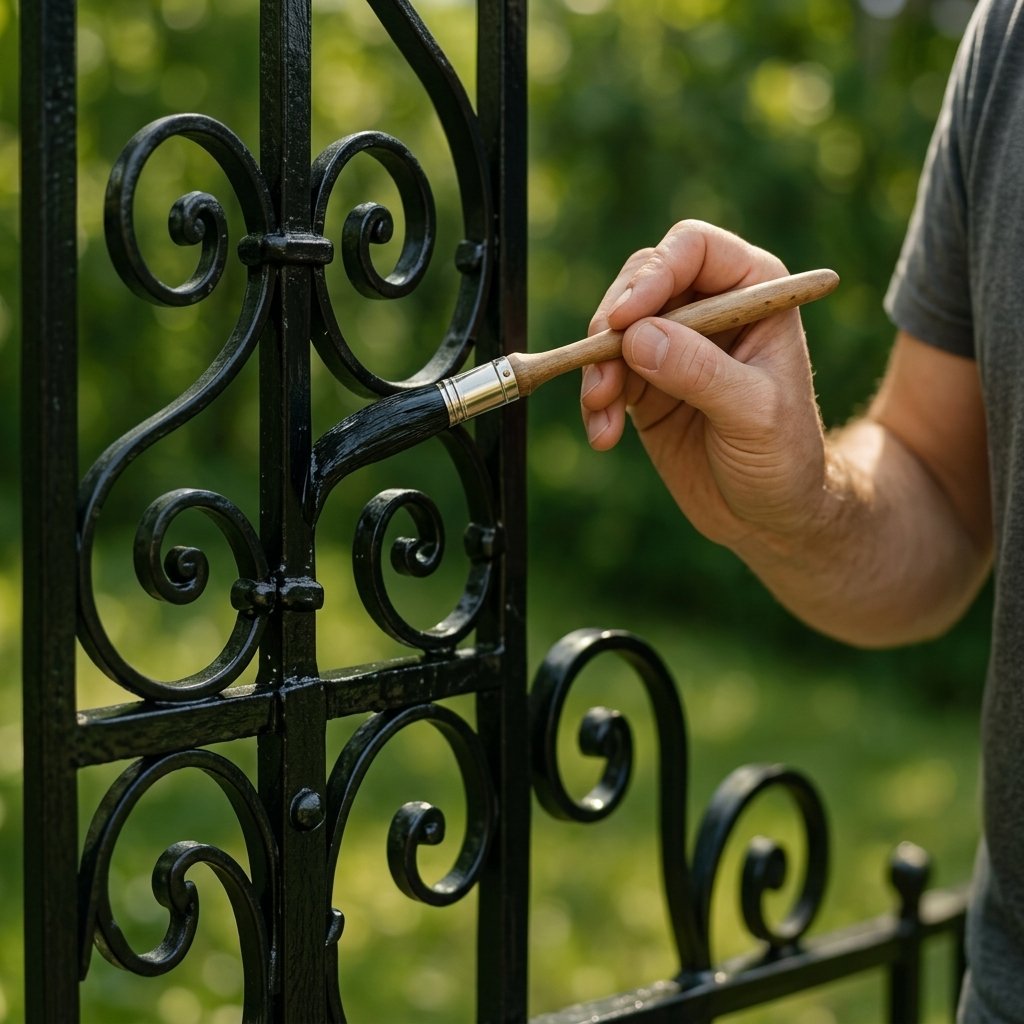
- We grind out rust and old paint down to clean metal, which tells us the real condition underneath
- We weld any cracked joints, straighten bent sections, and replace pieces that have thinned out too far to hold weight
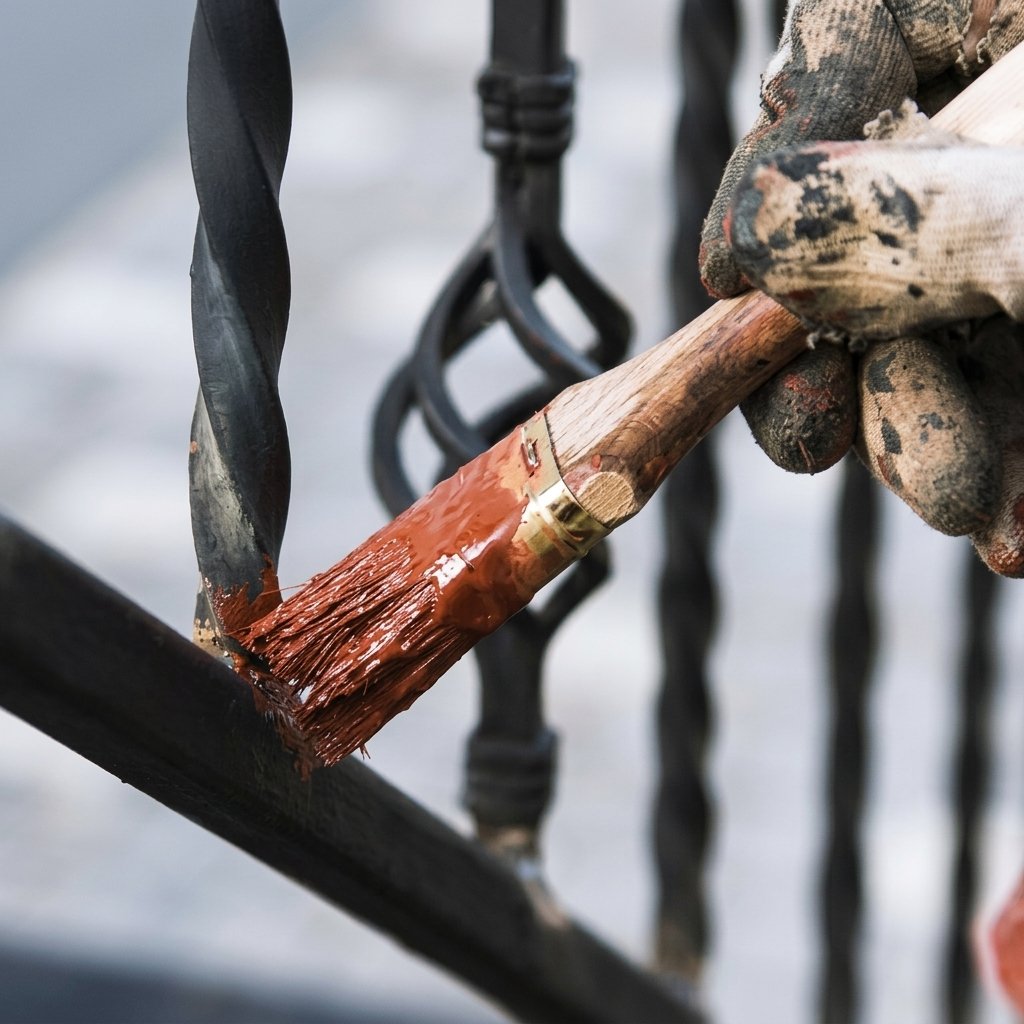
- We prime and refinish the iron to match the original style
- We reset the railing into its anchors and check it’s rock solid before we call the job done
Usually the posts are fine, and it’s the pickets or the paint that took the beating from weather — less cutting and less welding. If the base plate has rusted through where it bolts down, that part almost always needs to come out and get replaced properly, not patched over.
Matching Custom Ironwork on Older Stoops and Porches
The Cooper Avenue Row Historic District and other older pockets of Glendale have some of the neighborhood’s oldest homes, many built in the early 1900s with hand-scrolled iron on the stoops. When a section rusts through or gets bent, you can’t just bolt on a generic replacement piece — it’ll stick out.
We look at the original scroll pattern, baluster spacing, and old paint layers before we touch a thing. The original ironwork was hand-forged, so a machine-made replacement won’t match the hammer marks and slight irregularities that give it character.
- Scroll and finial shapes, copied by hand from the surviving sections
- Post spacing and baluster width, measured against the untouched original runs
- Metal thickness, since older stock iron often ran heavier than what’s sold today
- Mounting style, whether it’s set in stone, concrete, or an old lead pour
A lot of Glendale’s older stoops used lead-pour anchors, and modern bolt-in bases don’t always sit right without extra work. This kind of matching work falls under our Custom Wrought Iron Railings and Historic Restoration & Replication services.
Frequently Asked Questions
How fast can you come check my railing in Glendale?
We schedule most Glendale estimates within a few days of your call, checking anchor points and looking for rust hiding under the paint. Stoop railings near steps get priority since a wobble there is a fall risk.
How do I know if my railing just needs a touch-up?
Push the railing side to side and up and down. If it moves a little but the post itself feels solid in the concrete, that’s usually a tightening job, not structural damage. If the metal crumbles when you scratch it with a key, or the base swings loose, that’s a repair call.