
ADA & Commercial Handrails in Glendale: Ironwork Built to Pass Inspection
- 5.0 rating on Google reviews
- Licensed and insured
- Custom fabrication in steel, wrought iron, stainless, and aluminum
Signs Your Building Needs an ADA Handrail Upgrade
Wobbly rails, missing extensions, and grip bars that are too fat or too thin are common red flags. If a rail looks original to an old building, it likely predates current code and needs a second look.
Older commercial strips near Central Avenue still carry handrails installed long before current accessibility standards existed. The rail might look fine from ten feet away and still fail the basics up close.
- The rail wobbles or flexes when you grip it and pull
- It ends right at the top step with no extension past the last riser
- The gripping surface is too wide, too narrow, or has sharp edges
- There’s less than the required clearance between the rail and the wall
- Mounting brackets look rusted, loose, or pulled away from the surface
Any one of these on its own might not be a big deal. But two or three together, and you’re looking at a real liability.
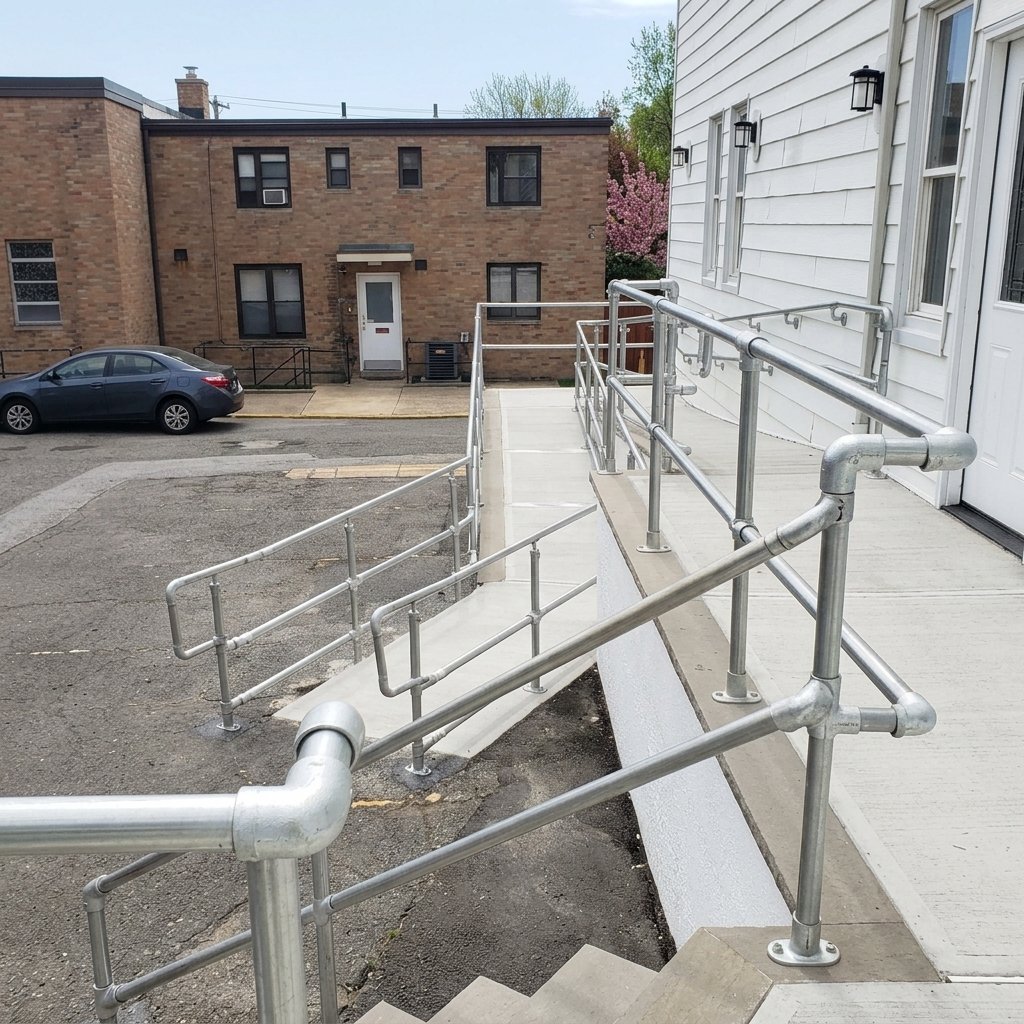
ADA vs. NYC Building Code: Two Standards, One Handrail
Here’s where a lot of folks get tripped up. The ADA is a federal civil rights law. It sets minimum handrail height, grip size, and extension rules so people with disabilities can use a stair or ramp safely. The NYC Building Code is a separate set of local rules that governs construction on your specific building. It doesn’t always match ADA word for word. A rowhouse stoop in Glendale might satisfy the building code for the block, but still miss ADA height by an inch.
We run into this constantly on mixed-use storefronts along Cooper Avenue and Myrtle Avenue, where the original iron railing was built decades before either standard existed.
- ADA sets handrail height between 34 and 38 inches, measured from the nose of the tread
- NYC Building Code covers structural attachment, baluster spacing, and load requirements for the whole run
- ADA requires a level extension at the top and bottom of the stair, code often does not
- Commercial entries open to the public usually need to satisfy both, residential interior stairs may only need code
A private two-family home has different obligations than a commercial storefront with public access. Our team builds custom handrails to whichever standard your property needs. See our main service page for the full range of custom wrought iron railing work we handle.
When Your Existing Railing Doesn't Need Full Replacement
Not every railing that gets flagged needs to come out. A lot of the ADA & Commercial Handrails work we do around Glendale is repair, not replacement. We see this every week: an inspector notes a gap in the handrail extension or a loose post, and the owner assumes the whole run has to go. It usually doesn’t.
- Loose or wobbly posts from old anchor bolts working free over time
- A grip diameter that’s slightly off code but the mounting brackets are solid
- Missing or short extensions at the top or bottom of a stair run
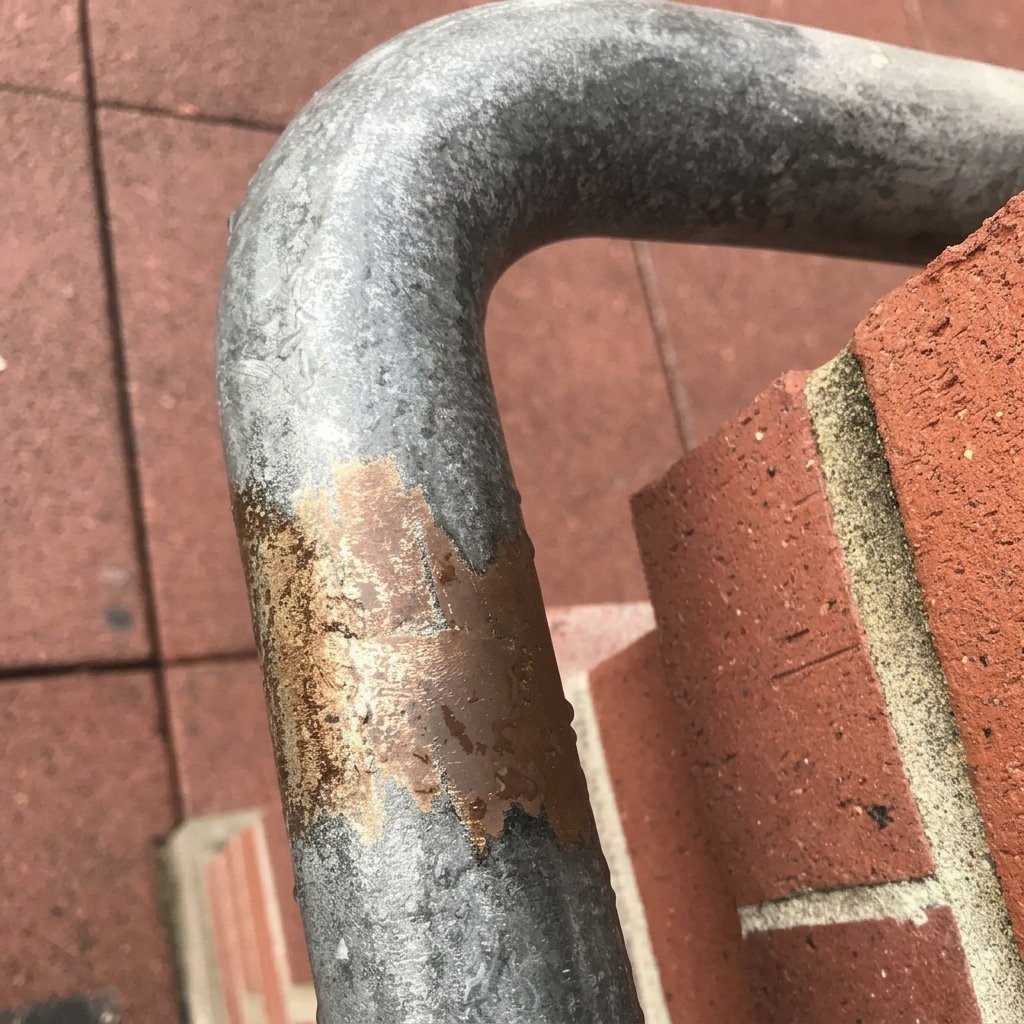
- Surface rust or paint failure on iron that’s still structurally sound underneath
- One section replaced to match an existing run instead of redoing the whole thing
We’ve walked into older strip retail buildings off Fresh Pond Road where the handrail iron itself was solid, decades old even, but the brackets had corroded and the whole thing shifted when you leaned on it. Re-anchoring and adding a code-compliant extension fixed it in an afternoon. No demolition needed.
If the base structure feels solid and the issue is dimension, grip, or a missing extension, repair is usually the answer. If the iron is cracked, the welds have failed, or rust has eaten through the post at the base, that’s a different conversation. We’ll tell you straight which one you’re dealing with.
What Happens During a Commercial Handrail Retrofit
It’s not complicated, but there’s a real process behind it — one that protects you as much as it protects everyone walking through your building. We walk the site first, every time.
- Site walk and measurement: we check rise, run, wall material, and where the rail needs to mount
- Code review: comparing your current setup against required clearance, height, and grip diameter
- Fabrication: building the rail to match code specs in stainless steel or aluminum depending on the building’s use
- Installation: anchoring to studs, block, or concrete depending on what the wall is
- Final check: testing grip, spacing, and load before we sign off on the job
We offer a free estimate before any of this starts. Older commercial buildings along Glendale’s Central Avenue corridor were built long before current ADA clearance rules existed, and retrofits there usually mean chasing out old plaster or furring to hit the required depth from the wall.
Frequently Asked Questions
Do you handle ADA handrail work across all of Glendale, including Central Avenue and Cooper Avenue?
Yes, we cover ADA and commercial handrail work throughout Glendale, from Central Avenue storefronts to the older mixed-use buildings along Cooper and Myrtle Avenue. We walk the site first to check the actual condition of the rail. Call us to set up a free estimate.
Does my Glendale building need to meet ADA rules, NYC Building Code, or both?
It depends on your building’s use. Commercial entries open to the public usually need to satisfy both ADA and NYC Building Code, while a private two-family home may only need to meet code. ADA sets handrail height between 34 and 38 inches with required extensions at top and bottom, while the code covers structural attachment and load requirements. We check both standards on the same visit so you’re not fixing the same handrail twice.